You follow your skincare routine religiously. You’ve switched to gentle cleansers, invested in targeted treatments, and diligently apply your products morning and night. Yet new breakouts continue appearing with frustrating regularity, seemingly without pattern or reason. You scrutinize your diet, blame stress, and wonder if your skin simply refuses to cooperate. What you might not realize is that the real culprits aren’t lurking in your skincare cabinet—they’re hiding in plain sight within seemingly innocent daily habits you repeat without a second thought.
The phone pressed against your cheek during long calls. The way you rest your chin in your hand while working. That pillowcase you haven’t changed in two weeks. These unconscious behaviors create perfect conditions for acne-causing bacteria, oil buildup, and inflammation that undermine even the best acne treatment routine. Understanding which everyday habits secretly sabotage your clear skin efforts transforms your approach from reactive spot-treatment to proactive prevention that actually works.
At AK Dermacare, we help patients identify and eliminate the hidden triggers keeping their skin trapped in the acne cycle. Here’s what you need to know about the daily habits causing your persistent breakouts—and what to do about them.
The Phone-Face Connection
Your smartphone harbors more bacteria than a public toilet seat. Studies show mobile phones carry ten times more bacteria than most toilet seats, including acne-causing Propionibacterium acnes and Staphylococcus. Every time you press your phone against your cheek during calls, you’re transferring this bacterial colony directly onto your skin, along with oil, makeup residue, and environmental pollutants accumulated throughout the day.
This contact triggers “acne mechanica”—breakouts caused by friction, pressure, and heat. The warmth from your phone opens pores, the pressure forces bacteria deeper, and repeated contact creates inflammation. If your breakouts cluster along your jawline, cheeks, or wherever your phone typically rests, this habit likely contributes significantly.
The Fix: Clean your phone screen daily with alcohol wipes or disinfectant specifically designed for electronics. Use speakerphone or earbuds whenever possible. If you must hold your phone to your ear, use the side opposite your worst breakouts and clean it before and after long calls. This simple change often produces noticeable improvement within 2-3 weeks, complementing your acne treatment routine.
Touching Your Face: The Unconscious Enemy
Most people touch their faces 16-23 times per hour without realizing it—resting chin in hand, rubbing eyes, scratching itches, or absentmindedly feeling blemishes. Each touch transfers bacteria, dirt, and oil from your hands directly into pores. Your hands contact countless contaminated surfaces daily: doorknobs, keyboards, handrails, money, and shared items that harbor invisible armies of acne-triggering microbes.
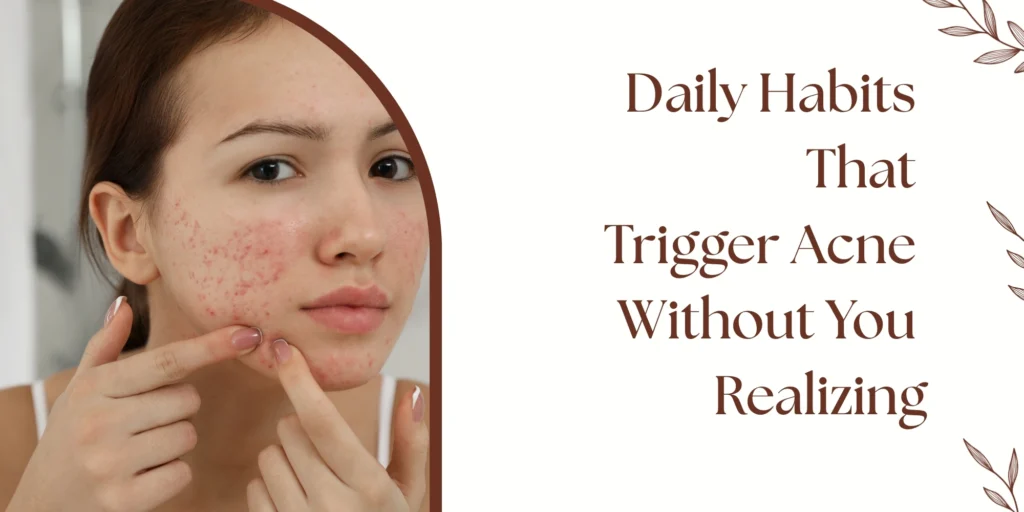
Picking or squeezing existing breakouts proves particularly destructive, forcing bacteria deeper into skin, rupturing follicle walls causing inflammation to spread, creating trauma that leads to scarring, and transferring bacteria to surrounding areas creating new breakouts. Yet the urge to “extract” blemishes feels nearly irresistible when you notice them in the mirror.
The Fix: Develop awareness of when and why you touch your face. Place sticky notes on your computer monitor reminding you not to rest your face in your hands. Keep hands busy with stress balls or fidget tools if nervous habits drive touching. Apply hydrocolloid patches over blemishes creating a physical barrier preventing picking while treating the spot. Professional extraction at AK Dermacare provides safe removal when necessary, supporting your overall acne treatment protocol.
The Dirty Pillowcase Problem
You spend 6-8 hours nightly with your face pressed against fabric that absorbs oil, dead skin cells, bacteria, hair products, and skincare residue. Night after night, you’re essentially marinating your face in yesterday’s (and last week’s) grime. This accumulated contamination transfers back onto clean skin, clogging pores and introducing bacteria that trigger new breakouts despite your careful evening cleansing routine.
The Fix: Change pillowcases every 2-3 days minimum, or place clean t-shirts over pillows each night for an economical alternative. Choose breathable cotton or silk fabrics rather than synthetic materials that trap heat and moisture. Wash linens in hot water with gentle, fragrance-free detergent. This simple hygiene improvement often produces dramatic acne reduction, especially for those experiencing cheek and jaw breakouts. It’s one of the easiest habits to modify that complements any best acne treatment you’re using.
Hair Products and Styling Habits
Conditioners, leave-in treatments, dry shampoo, mousse, gel, and hairspray contain oils and silicones that create luxurious shine and hold for your hair—but wreak havoc on skin. These products migrate from hair to your forehead, temples, and hairline throughout the day, particularly when you sweat or sleep. Many hair products also contain comedogenic ingredients specifically designed not to rinse out, meaning they’re formulated to stay put—unfortunately including on your skin.
Certain hairstyles exacerbate the problem. Bangs create constant friction against forehead skin while trapping oils and products. Hair touching your face throughout the day transfers bacteria and product residue. Even pulling hair back into tight styles can cause breakouts along the hairline from oil buildup and friction.
The Fix: Apply conditioner and styling products only to hair mid-lengths and ends, never near the scalp or hairline. Rinse thoroughly in the shower, tilting your head back so products flow away from your face. Use a headband or clips keeping hair off your face, especially during workouts or sleep. Choose non-comedogenic, oil-free hair products when possible. Shampoo after applying face masks or doing facial steaming to remove any products that may have transferred. These adjustments work synergistically with professional best acne treatment approaches.
Workout and Sweat-Related Triggers
Exercise benefits overall health and can improve skin through enhanced circulation and stress reduction. However, workout habits often trigger acne through several mechanisms. Sweat mixed with bacteria on skin’s surface creates ideal conditions for breakouts. Tight athletic wear, headbands, and hats trap heat and moisture against skin. Shared gym equipment harbors bacteria from multiple users. Not cleansing immediately after workouts allows sweat, bacteria, and oil to sit on skin clogging pores.
The Fix: Cleanse your face before working out to remove makeup, sunscreen, and surface oil preventing pore-clogging during sweating. Wear moisture-wicking, breathable fabrics rather than cotton that stays damp. Use clean towels between your face and shared gym equipment. Shower or at least thoroughly cleanse face within 30 minutes of finishing exercise. Keep gentle cleansing wipes in your gym bag for immediate post-workout face cleaning when showers aren’t immediately accessible. This prevents “gym acne” that can undermine your acne treatment progress.
The Diet-Acne Connection You’re Missing
While diet doesn’t cause acne for everyone, certain eating patterns trigger or worsen breakouts through hormonal and inflammatory pathways. High-glycemic foods like white bread, sugary snacks, and processed carbohydrates spike insulin levels, which increases sebum production and triggers inflammation. Excessive dairy consumption, particularly skim milk, has been linked to acne through hormones naturally present in milk that affect your own hormone levels.
Less obvious triggers include dehydration, which concentrates skin’s oil production, and irregular eating patterns that stress the body hormonally. Even seemingly healthy behaviors like excessive protein powder consumption or eating the same trigger foods daily without recognizing patterns can perpetuate breakouts.
The Fix: Keep a food-symptom diary tracking what you eat and when breakouts appear, looking for patterns over 4-6 weeks. Reduce high-glycemic foods, replace with complex carbohydrates, lean proteins, and vegetables. Limit dairy intake for 4 weeks to assess whether it affects your skin. Stay consistently hydrated with adequate water intake. Discuss dietary modifications during your consultation at AK Dermacare, where we integrate nutritional guidance with professional best acne treatment protocols for comprehensive improvement.
Over-Cleansing and Product Overload
Paradoxically, obsessive cleansing often worsens acne rather than improving it. Washing your face more than twice daily strips natural oils, triggering compensatory oil production that clogs pores. Harsh cleansers disrupt skin’s pH and barrier function, causing inflammation and sensitivity that manifest as breakouts. Using too many active ingredients simultaneously—multiple acids, retinoids, benzoyl peroxide, and other treatments—overwhelms skin causing irritation that looks like acne or actually triggers inflammatory breakouts.
The Fix: Cleanse gently twice daily only, using lukewarm water and pH-balanced cleansers. Avoid harsh scrubbing or abrasive tools. Introduce active ingredients gradually, one at a time, allowing skin to adjust. Less is often more—a simplified routine with fewer, targeted products often outperforms complicated multi-step regimens. Professional guidance at AK Dermacare helps you identify which products support your acne treatment goals and which create counterproductive irritation.
Professional Acne Treatment: When Habits Aren’t Enough
Eliminating acne-triggering habits provides essential foundation, but moderate to severe acne often requires professional intervention. At AK Dermacare, we offer comprehensive best acne treatment options addressing multiple acne mechanisms:
- Medical-Grade Topicals: Prescription-strength retinoids, antibiotics, and specialized formulations unavailable over-the-counter provide superior effectiveness compared to retail products.
- Acne Laser Treatment: Advanced laser technologies target acne through multiple mechanisms—destroying acne-causing bacteria, reducing oil gland activity, and decreasing inflammation. Acne laser treatment proves particularly effective for inflammatory acne resistant to topical treatments, providing long-lasting improvement that superficial treatments cannot achieve.
- Chemical Peels: Medical-grade peels exfoliate deeply, unclog pores, reduce bacteria, and improve texture. Regular professional peels create cumulative benefits supporting your home care routine.
- Extraction Procedures: Professional extraction safely removes comedones and cysts without scarring or spreading infection, providing relief from painful lesions while preventing long-term damage.
- Hormonal Treatments: For women with hormonal acne, oral medications like spironolactone address root causes that external treatments cannot resolve.
We design integrated protocols combining appropriate professional best treatment for acne options with habit modification and optimized home care, ensuring you address acne from every angle for maximum improvement.
The Stress-Sleep-Acne Triangle
Chronic stress elevates cortisol, which increases oil production and inflammation while suppressing immune function that normally controls acne bacteria. Poor sleep quality amplifies stress responses while disrupting skin’s natural repair processes. Together, these create a vicious cycle where stress causes breakouts, breakouts cause stress, and insufficient sleep prevents recovery.
The Fix: Prioritize 7-8 hours of quality sleep in cool, dark environments. Practice stress management through exercise, meditation, or activities you find genuinely relaxing. Recognize that addressing stress and sleep issues constitutes legitimate acne treatment components, not merely lifestyle suggestions.
Creating Your Complete Action Plan
Transform your skin by combining habit modification with professional care:
- Audit your daily routine identifying which triggers apply to you
- Implement the easiest changes first building momentum
- Keep a journal tracking which modifications produce noticeable improvement
- Schedule a comprehensive evaluation at AK Dermacare for professional assessment
- Combine your improved habits with appropriate best treatment for acne recommendations
- Give changes adequate time—most require 4-8 weeks showing visible benefit
- Maintain successful modifications long-term preventing recurrence
Why Choose AK Dermacare
We provide comprehensive acne solutions combining advanced acne laser treatment, medical-grade products, and personalized guidance addressing your unique triggers. Our approach recognizes that successful acne management requires treating medical factors alongside behavioral modifications.
During consultation, we identify your specific acne type and triggers, evaluate which habits contribute to your breakouts, recommend appropriate professional treatments, provide practical strategies for habit modification, and design realistic protocols you’ll actually follow long-term.
Final Thoughts
Your persistent acne might not stem from inadequate products or uncontrollable genetics—hidden daily habits could be the real culprits undermining your efforts. From contaminated phones and pillowcases to unconscious face-touching and post-workout routines, these seemingly innocent behaviors create perfect conditions for breakouts. Identifying and eliminating these triggers provides essential foundation for clear skin.
However, when habit modification alone doesn’t resolve acne, professional intervention makes the difference. At AK Dermacare, we offer proven best acne treatment solutions including acne laser treatment and medical therapies that address stubborn acne effectively when combined with optimized daily habits.
Ready to finally achieve clear skin? Schedule your consultation at AK Dermacare and discover how professional best treatment for acne combined with strategic habit changes creates the lasting results you deserve.
Frequently Asked Questions (FAQs)
1. Can changing daily habits really clear acne without treatment?
For mild acne triggered primarily by behaviors like dirty pillowcases, phone contamination, or face-touching, habit modification alone can produce significant improvement. However, moderate to severe acne typically requires professional acne treatment alongside habit changes. The most effective approach combines eliminating triggers with appropriate medical intervention. We assess your specific situation during consultation, determining whether habit modification alone suffices or if professional best acne treatment options will accelerate your results.
2. What is the best acne treatment for stubborn breakouts?
The best acne treatment depends on your acne type and underlying causes. Hormonal acne responds to specific oral medications, inflammatory acne benefits from acne laser treatment, and comedonal acne improves with retinoids and professional extraction. At AK Dermacare, we evaluate your specific situation designing customized protocols. Often, the best treatment for acne combines multiple approaches—habit modification, medical-grade topicals, professional procedures, and sometimes oral medications—addressing acne from every angle simultaneously.
3. How long before I see results from changing acne-causing habits?
Most people notice reduced breakout frequency within 2-4 weeks of consistently eliminating major triggers like contaminated pillowcases or excessive face-touching. However, existing breakouts need time to heal, and new ones already forming beneath skin’s surface will still emerge. Give habit changes 6-8 weeks showing full benefit. Combining improved habits with professional best acne treatment often produces faster visible improvement than either approach alone.
4. Is acne laser treatment worth it for habit-related breakouts?
If modifying habits doesn’t adequately control breakouts, acne laser treatment provides excellent results by addressing underlying factors like excess oil production and bacterial overgrowth that habits alone cannot resolve. Laser therapy reduces breakout frequency and severity long-term, making it valuable investment for moderate to severe acne. We help you determine whether acne laser treatment suits your specific situation or if other interventions prove more appropriate.
5. What’s the single most important habit change for preventing acne?
While individual triggers vary, eliminating face-touching and ensuring clean pillowcases produce the most universal improvement across different acne types. These simple changes prevent bacterial transfer that undermines even the best treatment for acne. However, comprehensive evaluation at AK Dermacare identifies your specific primary triggers, ensuring you focus efforts where they’ll produce maximum benefit for your unique situation.