
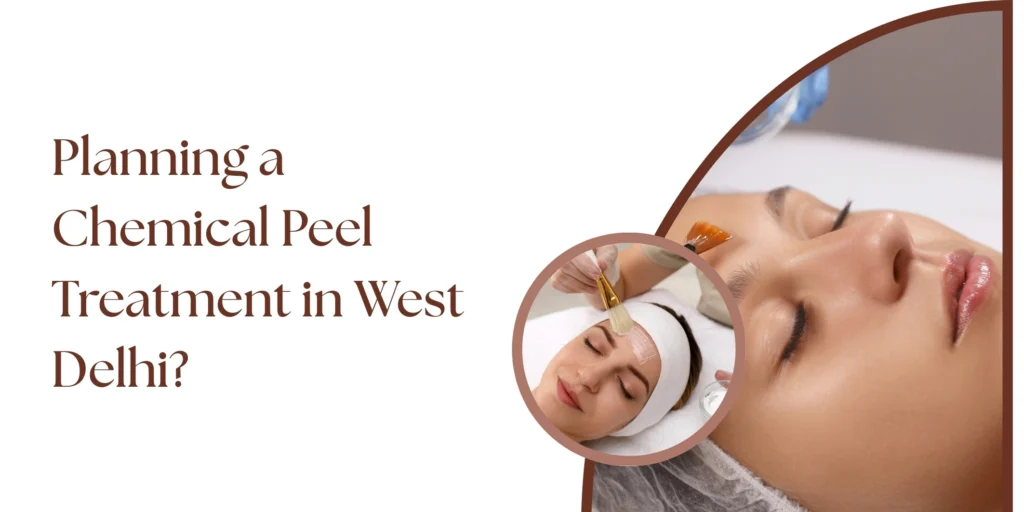
Chemical peel treatment in West Delhi is one of the most effective, dermatologist-recommended procedures for addressing pigmentation, uneven skin tone, acne marks, dullness, and surface texture, when performed correctly and followed by the right aftercare. The treatment works by applying a controlled acid solution to the skin that accelerates cell turnover, removes damaged surface layers, and reveals healthier, clearer skin underneath. At AK Dermacare, Dr. Parul Garg customizes peel depth, formulation, and chemical peel aftercare protocols to each patient’s skin type, concern, and Indian skin tone, ensuring results that are safe, visible, and lasting.
Key Takeaways
- What does a chemical peel treat? Pigmentation, sun tan, uneven skin tone, acne marks, open pores, dullness, fine lines, and surface texture irregularities, depending on peel depth and formulation.
- Is it safe for Indian skin? Yes, when performed by a qualified dermatologist who selects the correct peel type and depth for your Fitzpatrick skin tone. Indian skin requires specific calibration to prevent post-inflammatory hyperpigmentation.
- What is the recovery time? Superficial peels: 3–5 days of mild flaking. Medium-depth peels: 5–10 days of visible peeling. Deep peels: 2–3 weeks of significant recovery. Most patients continue normal activities throughout.
- How important is sun protection after a chemical peel? Non-negotiable. Sun protection after chemical peel is the single most critical aftercare step, fresh post-peel skin is highly vulnerable to UV-triggered pigmentation that can undo results entirely.
Most people know what a chemical peel is supposed to deliver a clearer, brighter, more even skin. What fewer people know is what happens in the days immediately after the treatment, and how significantly the aftercare period determines whether those results actually materialize.
A chemical peel treatment is not a passive procedure. The skin’s response in the 5–10 days following the session, how it is cared for, what it is exposed to, and what products are applied, is as important to the final result as the peel itself. Patients who invest in a well-chosen skin peeling treatment and then neglect sun protection, apply the wrong products, or return to their usual routine too quickly often find their results disappointingly short-lived. Patients who follow the right chemical peel aftercare protocol consistently see the transformation the treatment is designed to deliver.
At AK Dermacare in West Delhi, Dr. Parul Garg believes that a well-informed patient gets better results. Here is everything you need to know about chemical peel treatment in West Delhi, what happens to your skin during and after, what to expect day by day, and exactly how to protect your skin to get the most from every session.
What Is a Chemical Peel Treatment and How Does It Work?
A chemical peel treatment involves the controlled application of an acid solution to the skin surface. This solution dissolves the bonds between dead and damaged skin cells, triggering a process of accelerated exfoliation and cell renewal. As the treated surface layers shed, they are replaced by fresher, healthier skin with improved tone, texture, and clarity.
The depth of the peel, and therefore the extent of results and recovery, is determined by the acid used, its concentration, and how long it is left on the skin. Dr. Parul Garg assesses skin type, concern severity, Fitzpatrick tone, and skin sensitivity before selecting the appropriate formulation for each patient.
Superficial Peels: Use mild acids, glycolic (AHA), lactic, mandelic, or low-concentration salicylic. They treat the outermost skin layer (epidermis), addressing dullness, mild pigmentation, dehydration, and surface congestion. Recovery is minimal, mild flaking over 3–5 days. Safe to repeat every 2–4 weeks.
Medium-Depth Peels: Use TCA (trichloroacetic acid) at moderate concentrations or Jessner’s solution. They penetrate into the upper dermis, addressing moderate pigmentation, acne marks, sun damage, and uneven tone more significantly. Recovery involves visible peeling over 5–10 days.
Deep Peels: Use high-concentration TCA or phenol. Reserved for significant sun damage, deep pigmentation, or pronounced texture concerns. Recovery requires 2–3 weeks and must be performed under strict medical supervision. Less commonly used in Indian skin given the higher risk of pigmentation changes.
At AK Dermacare, the majority of chemical peel treatments for Indian patients use superficial to medium-depth formulations, calibrated specifically for darker Indian skin tones where aggressive peeling carries a genuine risk of post-inflammatory hyperpigmentation if not managed correctly.
Skin Peeling Treatment: What to Expect Peel-by-Peel
Understanding what each peel type delivers, and what the skin goes through, removes the anxiety that many patients feel when they see their skin beginning to shed.
| Peel Type | Acids Used | Concerns Treated | Visible Peeling | Recovery Time |
| Superficial | Glycolic, lactic, mandelic, salicylic | Dullness, mild pigmentation, acne congestion, uneven tone | Mild flaking | 3–5 days |
| Medium-depth | TCA, Jessner’s | Moderate pigmentation, acne marks, sun tan, texture | Visible peeling | 5–10 days |
| Deep | High TCA, phenol | Significant sun damage, deep pigmentation | Significant shedding | 2–3 weeks |
What happens during the session: The skin is cleansed, degreased, and prepped before the acid solution is applied. You will feel a tingling or mild burning sensation, normal, expected, and short-lived. A neutralizing solution is applied to stop the acid’s action at the appropriate time. The session typically takes 20–45 minutes depending on peel type and number of areas treated.
What your skin looks like immediately after: Redness and a tight, slightly warm sensation are normal immediately post-peel. Superficial peels may leave the skin looking slightly flushed for a few hours. Medium-depth peels often produce more pronounced redness and a tighter feeling that develops over 24–48 hours before peeling begins.
Day-by-Day: What to Expect After Chemical Peel Treatment
This is the section most patients wish they had read before their first peel. Understanding exactly what your skin will do, and that it is normal, prevents alarm and unnecessary interference with the healing process.
Day 1–2 (Superficial Peel) / Day 1–3 (Medium Peel)
Skin feels tight, slightly dry, and may appear mildly red or bronzed. There is no visible peeling yet. This is the acid working at the cellular level, breaking the bonds between dead surface cells. Do not attempt to exfoliate or accelerate peeling. Gentle cleansing and generous moisturizer application are the only actions needed.
Day 2–4 (Superficial Peel) / Day 3–6 (Medium Peel)
Peeling begins, typically starting around the mouth, chin, and forehead, then spreading to cheeks. For superficial peels, this is a fine, dry flaking similar to mild sunburn shedding. For medium-depth peels, peeling is more pronounced, thicker sheets in some areas. This phase is the visual evidence that the treatment is working. Do not pick, peel, or pull at shedding skin under any circumstances. Forcing the skin to shed before it is ready causes raw patches, infection risk, and post-inflammatory marks.
Day 4–6 (Superficial Peel) / Day 5–10 (Medium Peel)
Peeling progressively completes. New skin underneath appears smoother, brighter, and more even in tone. Some areas may feel temporarily sensitive. Redness reduces significantly. At the end of this phase, the improvement in skin clarity and texture becomes clearly visible.
Day 7 onward
Skin has largely settled. Pigmentation improvement and tone evening continue to develop over the following 2–4 weeks as new collagen forms and cell turnover normalizes. This is when patients see the full result of their skin peeling treatment, and why multiple sessions spaced appropriately build progressively better outcomes.
Chemical Peel Aftercare: The Complete Protocol
Chemical peel aftercare is not optional. It is the second half of the treatment. Following it correctly determines how much of the clinical result you actually see.
What to Do
Cleanse gently: Use a mild, non-foaming, non-stripping cleanser, nothing with active ingredients, fragrances, or exfoliating agents. Pat dry; never rub. Twice daily is sufficient.
Moisturize consistently: Apply a gentle, fragrance-free moisturizer or dermatologist-recommended healing cream generously and frequently. Keeping the skin hydrated speeds healing, reduces tightness, and minimizes the discomfort of peeling. Dr. Parul Garg prescribes specific post-peel moisturizers at AK Dermacare based on peel depth and skin type.
Apply SPF without fail: This is the single most critical step in chemical peel aftercare. See the dedicated section below.
Let the skin shed naturally: The peeling process cannot be shortened safely. Trust it. The skin is shedding on schedule because the peel worked correctly.
Stay hydrated: Internal hydration supports skin healing. Increase water intake in the days following a peel.
What to Avoid
- No active skincare during the peeling phase: No retinoids, AHAs, BHAs, Vitamin C serums, niacinamide at high concentrations, or any exfoliating product until Dr. Parul Garg confirms skin has fully healed
- No picking or peeling: The most common cause of post-peel scarring and pigmentation marks is patients manually removing peeling skin before it is ready
- No hot water: Hot showers, steam rooms, saunas, and hot baths increase inflammation in post-peel skin, use lukewarm water only
- No heavy exercise for 48–72 hours: Sweating introduces bacteria to sensitized skin and can cause breakouts or irritation
- No makeup for at least 24–48 hours post-peel (longer for medium-depth peels), or until Dr. Parul Garg advises it is safe
- No swimming pools or sea water: Chlorine and salt water are highly irritating to healing post-peel skin
Sun Protection After Chemical Peel: Why It Cannot Be Compromised
Sun protection after chemical peel is the most critical, and most frequently underestimated, element of the entire treatment process.
Here is why it matters so profoundly for Indian skin in particular.
After a chemical peel treatment, the outermost protective layer of the skin has been intentionally removed or significantly thinned. This leaves the new, fresh skin underneath with almost no natural defense against UV radiation. Even brief unprotected sun exposure during the healing phase, 10–15 minutes on a hazy Delhi morning, can trigger post-inflammatory hyperpigmentation (PIH) that is not only unsightly but can take months of additional treatment to correct.
For Indian skin (Fitzpatrick types III–VI), which already has a higher inherent tendency toward PIH, this risk is magnified. It is the primary reason dermatologists insist on stringent sun protection after chemical peel as a non-negotiable condition of treatment.
What Dr. Parul Garg recommends:
- SPF 50+ broad-spectrum sunscreen, applied every morning as the final skincare step, even indoors near windows, where UVA penetrates
- Reapplication every 2 hours when outdoors, regardless of cloud cover
- Physical sun protection: wide-brimmed hat, UV-protective sunglasses, and avoiding peak sun hours (10 am–4 pm) wherever possible
- No tanning, no sun lounging, no outdoor activity without full protection for a minimum of 2–4 weeks post-peel (longer for medium-depth peels)
- Prescription-grade Vitamin C serum (reintroduced once skin has fully healed, as confirmed by Dr. Parul Garg) as an antioxidant layer that reduces UV-triggered pigmentation damage
The investment in a chemical peel treatment can be entirely undone by inadequate sun protection. Every patient at AK Dermacare receives detailed, written aftercare instructions covering sun protection after chemical peel as part of their post-procedure protocol.
Chemical Peel Treatment in West Delhi for Indian Skin: What Makes It Different
Performing chemical peel treatment on Indian skin is not the same as performing it on lighter Fitzpatrick skin types, and clinics that apply identical peel protocols regardless of skin tone are the primary source of the pigmentation complications and disappointing results that bring patients to AK Dermacare seeking correction.
Here is what skilled dermatologists do differently for Indian skin:
Peel Selection: Mandelic acid and low-concentration salicylic acid peels are better tolerated by darker Indian skin types as a starting point because they are gentler and carry lower PIH risk than high-concentration glycolic peels. TCA at appropriate concentrations is effective for medium-depth work but requires precise application and neutral timing.
Pre-Peel Priming: Before beginning a course of chemical peels, Dr. Parul Garg prescribes a priming period of 2–4 weeks using prescription-grade topical agents (typically a combination of retinoid, hydroquinone or arbutin, and Vitamin C) that prepare the skin to respond evenly to the peel and reduce PIH risk.
Conservative Progression: Starting with lower concentrations and increasing progressively, rather than applying aggressive peels in initial sessions, produces safer, more consistent results for Indian skin.
Post-Peel Pigmentation Management: An ongoing topical protocol following each peel session ensures that any mild post-inflammatory response is managed before it becomes established hyperpigmentation.
At AK Dermacare, every chemical peel treatment in West Delhi is designed around these principles, because for Indian skin, how the peel is done is as important as the peel itself.
How Many Sessions Are Needed and How to Plan Your Course
A single skin peeling treatment delivers visible improvement, but the transformative results patients see in before-and-after photographs come from a planned course of sessions that allow the skin to progressively renew, respond, and stabilize between each treatment.
Superficial peels: A course of 4–6 sessions, spaced 2–4 weeks apart, is standard for concerns like dullness, mild pigmentation, uneven tone, and acne congestion.
Medium-depth peels: A course of 2–3 sessions, spaced 6–8 weeks apart, allows adequate healing between sessions and progressive deepening of results.
Maintenance: After completing an initial course, maintenance sessions every 2–3 months sustain results and prevent the accumulation of new pigmentation and surface damage.
At AK Dermacare, Dr. Parul Garg reassesses the skin after each session, adjusting the peel formulation and concentration based on how the skin responds. This adaptive approach, rather than a fixed protocol, is what delivers consistently better outcomes across a course of treatment.
Why Choose AK Dermacare for Chemical Peel Treatment in West Delhi
For patients in West Delhi considering chemical peel treatment, AK Dermacare under Dr. Parul Garg offers a clinically rigorous, safety-first approach that is specifically calibrated for Indian skin.
Dermatologist-Led Assessment: Every patient receives a full skin assessment before any peel is recommended, identifying skin type, Fitzpatrick tone, concern severity, and any contraindications that affect peel selection.
Customized Peel Protocols: No generic packages. Peel formulation, concentration, depth, and session frequency are selected specifically for your skin and your goals, adjusted after each session based on response.
Pre-Peel Priming and Post-Peel Care Plans: Dr. Parul Garg prescribes both a priming regimen before beginning the peel course and a detailed chemical peel aftercare protocol, including specific product recommendations and sun protection after chemical peel guidelines, to maximize results and minimize PIH risk.
Indian Skin Expertise: Darker skin tones require a fundamentally different approach to skin peeling treatment than lighter skin types. At AK Dermacare, every peel protocol is built around this understanding, not adapted from it as an afterthought.
Final Thoughts
A chemical peel treatment is not complicated. But it does require the right expertise on one side of the treatment table, and the right commitment on the other. Choosing a qualified dermatologist for your chemical peel treatment in West Delhi, following a proper chemical peel aftercare protocol, and taking sun protection after chemical peel seriously are the three factors that determine whether your skin peeling treatment delivers the results you came for.
At AK Dermacare, Dr. Parul Garg ensures that every patient leaves not just with a well-performed peel, but with the complete knowledge and aftercare support to protect and maximize every rupee and every session invested in their skin. Because in dermatology, as in most things, the result is only as good as the care that follows it.
Frequently Asked Questions (FAQs)
1. How long does it take to recover from a chemical peel?
Recovery depends on peel depth. Superficial peels involve mild flaking for 3–5 days with no significant downtime, most patients continue work and normal activities throughout. Medium-depth peels involve visible peeling for 5–10 days. Most patients plan their chemical peel treatment in West Delhi sessions around this window, avoiding important events within 7–10 days of a medium peel.
2. Are chemical peels safe for Indian skin?
Yes, when performed by a qualified dermatologist who selects the correct peel type, concentration, and depth for your Fitzpatrick skin tone. Indian skin (Fitzpatrick III–VI) has a higher tendency toward post-inflammatory hyperpigmentation, which means peel selection, priming, and chemical peel aftercare must all be calibrated accordingly. At AK Dermacare, Dr. Parul Garg specializes in skin peeling treatment for Indian skin tones.
3. What is the cost of chemical peel in West Delhi?
Cost depends on the peel type (superficial, medium, or deep), the treatment area, number of sessions, and the clinic. Superficial peels are more affordable and are often offered in course packages. At AK Dermacare, pricing is discussed transparently during the initial consultation, with a personalized course recommendation based on your specific skin concern and goals.
4. Does chemical peel remove pigmentation permanently?
Chemical peels deliver significant, lasting improvement in surface pigmentation, sun tan, post-acne marks, and uneven tone, particularly with a full course of sessions. Sun-induced and post-acne pigmentation responds very well and can achieve long-lasting clearance. Melasma (hormonally driven pigmentation) can recur with sun exposure and hormonal triggers, making consistent daily sun protection after chemical peel and periodic maintenance sessions essential for sustained results.
5. Can I wear makeup after a chemical peel?
After a superficial peel, most patients can apply gentle, mineral-based makeup after 24–48 hours once active redness has subsided. After a medium-depth peel, makeup should be avoided until peeling is complete and skin has fully closed, typically 7–10 days. Dr. Parul Garg advises each patient individually at AK Dermacare based on how their skin is healing.