PRP therapy uses the patient’s own blood platelets to support skin rejuvenation and hair restoration by encouraging healing, collagen production, and follicle activity. It is commonly used for early hair thinning, dull skin, acne scars, and mild signs of ageing, with results that appear gradually over multiple sessions. For patients considering PRP Skin treatment in West Delhi or PRP hair treatment in West Delhi, the key is proper diagnosis, the right treatment schedule, and careful aftercare.
Key Takeaways
- Does PRP really work for hair loss? Yes, PRP can help reduce shedding and improve hair thickness in selected patients, especially when started early.
- Is PRP good for skin rejuvenation? Yes, it can improve texture, glow, and collagen support over time.
- How long do PRP results last? Hair results may last around 12 to 18 months with maintenance, while skin results vary depending on the treatment plan.
- What should I avoid after PRP treatment? Avoid heavy sweating, harsh products, direct sun, and chemical irritation for at least 24 to 48 hours..
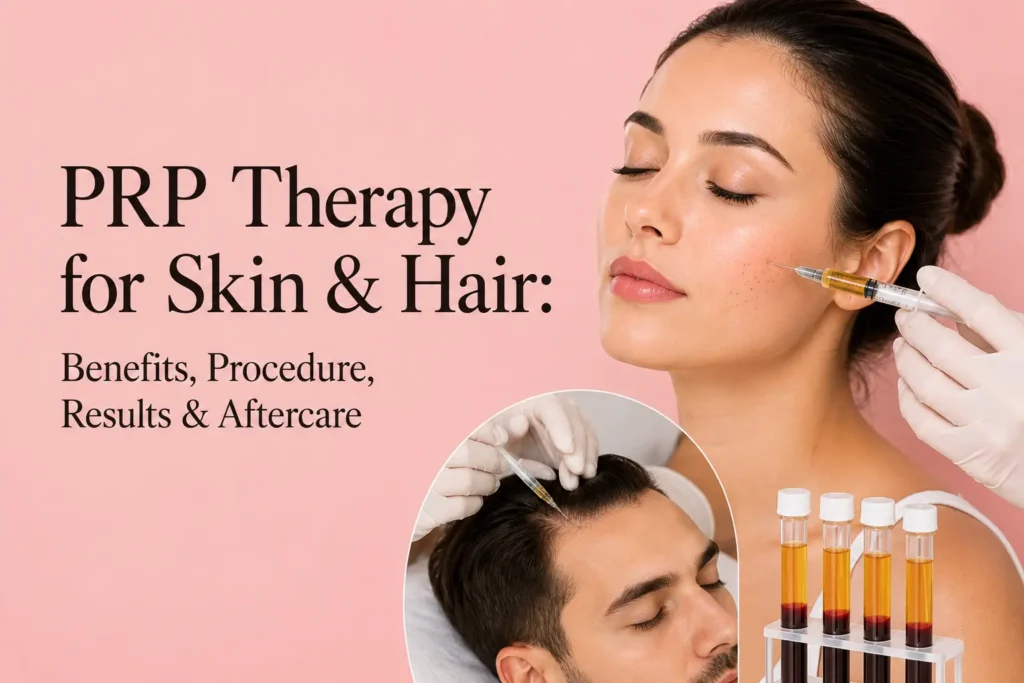
Platelet-Rich Plasma, or PRP, is a regenerative treatment that uses a concentrated portion of your own blood to help repair and rejuvenate tissue. Blood is drawn from the patient, spun in a centrifuge, and separated so the platelet-rich layer can be used for treatment. These platelets contain growth factors that play an important role in healing, collagen stimulation, and tissue repair.
In dermatology, Platelet-Rich Plasma is used for both skin and hair concerns. For the skin, it is valued for its ability to support smoother texture, improved radiance, and a fresher overall appearance. For the scalp, it is used to help strengthen hair follicles, reduce shedding, and support healthier growth in patients with early thinning or pattern hair loss.
Because PRP comes from the patient’s own blood, it is considered a natural and biologically compatible treatment. That is one reason many people prefer it over more synthetic or invasive options. Still, results depend on the person’s condition, the technique used, and how consistently the treatment is followed.
How PRP Works for Skin
Platelet-Rich Plasma helps the skin by delivering growth factors that stimulate the body’s repair process. These growth factors support collagen production, improve cell turnover, and encourage tissue regeneration. Over time, this can help the skin look more refreshed, smoother, and healthier.
Many patients choose PRP Skin treatment in West Delhi because they want a subtle but noticeable improvement without surgery or a long recovery period. It is often used for dullness, rough texture, fine lines, acne marks, and skin that has started to lose firmness. The treatment is especially appealing to people who want natural-looking results rather than dramatic change.
Unlike fillers, PRP does not add volume directly. Instead, it works by helping the skin improve itself from within. That makes it a good fit for patients who want a regenerative treatment that supports long-term skin quality.
How PRP Works for Hair
PRP is widely used in hair restoration because it may help reactivate weakened follicles and improve the scalp environment. The growth factors released by platelets may help support the hair cycle, reduce excessive shedding, and improve follicle health. This can be especially useful in early-stage hair thinning, where follicles are still present but not functioning at their best.
PRP hair treatment in West Delhi is often recommended for people with pattern hair loss, stress-related shedding, or thinning hair that is still responsive to treatment. It is not designed to create new follicles, so it works best when the hair loss has not become too advanced. In that sense, timing matters a great deal.
Many patients appreciate that Platelet-Rich Plasma is a supportive treatment rather than a harsh intervention. It can be part of a broader plan that includes scalp care, medical treatment, and lifestyle support. When used appropriately, it may help improve the overall quality and appearance of the hair.
Does PRP Really Work for Hair Loss?
PRP can work for hair loss, but its benefits are usually seen in the right candidates and with the right expectations. It is most effective in people with mild to moderate thinning, especially when follicles are still alive and capable of responding. In such cases, it may reduce shedding, improve density, and strengthen hair shafts.
That said, PRP is not a cure for advanced baldness. It cannot bring back follicles that are no longer active. For that reason, it is often better to think of PRP as a treatment that supports and preserves existing hair rather than a one-time fix for severe hair loss.
The most realistic outcomes usually come from a series of treatments followed by maintenance sessions. Patients who stay consistent tend to see better long-term results than those who try one session and stop. A dermatologist can help determine whether PRP is likely to help in a specific case.
Is PRP Good for Skin Rejuvenation?
PRP is considered a good option for skin rejuvenation because it encourages the skin’s own repair process. It can improve the way skin looks and feels by supporting collagen formation and tissue renewal. Over time, this may lead to a brighter, smoother, and more even complexion.
It is often chosen by people who want something more restorative than a cosmetic cover-up. PRP is not about masking skin issues; it is about improving the skin’s underlying quality. That makes it suitable for patients with early ageing signs, acne scars, or general dullness.
Results build gradually, which is one reason many patients like it. The changes are usually subtle at first and become more visible after repeated sessions. This creates a refreshed look that still feels natural.
PRP Procedure Step by Step
A PRP session is usually straightforward and performed in a clinic. First, a small amount of blood is drawn from the patient. That blood is then placed in a centrifuge, which separates the platelet-rich plasma from the other blood components.
Once prepared, the PRP is applied or injected into the treatment area depending on whether the concern is skin or hair. For the scalp, it is typically injected into targeted areas of thinning. For skin, it may be used alone or with supportive procedures such as microneedling, depending on the treatment plan.
The procedure usually takes less than an hour. Most people tolerate it well, and the downtime is generally mild. Some temporary redness, swelling, or tenderness may occur, but this usually settles quickly.
What Happens During a Session?
A standard PRP session generally begins with consultation and assessment. The dermatologist examines the skin or scalp, reviews the concern, and decides whether PRP is suitable. Once the treatment plan is set, the blood is collected and processed.
After the PRP is prepared, it is delivered to the skin or scalp. The dermatologist may use fine injections or combine PRP with another technique to improve delivery. The exact method depends on the patient’s needs and the expected response.
After the procedure, the patient receives instructions for recovery and care. Because PRP is minimally invasive, most people can return to routine activities soon after treatment. However, proper aftercare is important for comfort and results.
PRP Results Timeline
PRP results are gradual, not immediate. For hair, the first sign of improvement is often reduced shedding, followed by better texture and then visible improvement in thickness or density. These changes typically develop over several weeks to a few months.
For skin, some patients notice an early glow or freshness, while deeper changes such as improved texture and collagen support take longer. Because PRP works through regeneration, the body needs time to respond. That is why a series of sessions is usually more effective than a single treatment.
The best results are usually seen with consistency. PRP builds over time, and the treatment schedule matters as much as the procedure itself. Patients who follow the full plan generally achieve better outcomes.
How Long Do PRP Results Last?
How long PRP results last depends on the condition being treated and how well maintenance is followed. For hair, results often last around 12 to 18 months in many patients when maintenance sessions are continued. For skin, the duration can vary depending on age, skin condition, and additional treatments.
PRP should be understood as a maintenance-based treatment. It supports improvement, but the body continues to age and hair loss can continue if the underlying cause remains active. That is why many dermatologists recommend periodic booster sessions.
With proper planning, the benefits can be extended. Good aftercare, healthy habits, and regular follow-up all help preserve the result for longer. In that sense, PRP works best as part of an ongoing care routine.
Aftercare After PRP
Aftercare plays an important role in how the skin or scalp responds to PRP. In the first 24 to 48 hours, it is usually best to keep the treated area calm and avoid anything that could cause irritation. Gentle care helps the recovery process go more smoothly.
For skin PRP, patients are often advised to use mild skincare only and avoid strong actives such as acids or retinoids immediately after treatment. For scalp PRP, harsh shampoos, heavy styling products, and colouring should generally be avoided for a short period. This gives the area time to settle.
It is also wise to avoid excess heat, direct sun, and heavy sweating right after the procedure. These simple precautions can reduce discomfort and support better outcomes. Aftercare may seem basic, but it has a meaningful impact on results.
What to Avoid After PRP Treatment
After PRP treatment, it is generally best to avoid:
- Heavy exercise or sweating for at least 24 to 48 hours.
- Direct sun exposure without protection.
- Scrubs, acids, retinoids, and other strong actives too soon.
- Hair colouring, chemical treatments, or heat styling immediately after scalp PRP.
- Smoking and alcohol, which may interfere with recovery.
These precautions help the treated area heal properly and reduce the chance of irritation. Depending on whether the treatment is for skin, hair, or both, the dermatologist may adjust the guidance slightly. Following those instructions carefully can help the treatment perform better.
Who Is a Good Candidate?
PRP is often a good choice for people with early hair thinning, mild to moderate pattern hair loss, dull skin, acne scars, or early ageing concerns. It is also suitable for those who prefer a treatment that uses their own blood-derived growth factors instead of synthetic products.
However, it is not ideal for everyone. Patients with advanced baldness, active infections, certain blood disorders, or untreated skin conditions may need a different treatment approach. A proper evaluation is important before starting PRP hair treatment in West Delhi or PRP Skin treatment in West Delhi.
The best candidates are usually those who have realistic expectations and understand that PRP works gradually. It is not a dramatic overnight solution, but it can be a very valuable part of a personalised dermatology plan.
Why Dermatologist-Led PRP Matters
PRP may sound simple, but the results depend heavily on how it is prepared and delivered. The concentration of platelets, the injection technique, the number of sessions, and the patient’s condition all affect the outcome. This is why a structured, medical approach matters.
A dermatologist can evaluate whether PRP is the right choice or whether it should be combined with other therapies. In a clinic setting, the treatment can be customised based on whether the main concern is scalp thinning, skin dullness, acne scars, or overall rejuvenation.
That personalised approach is especially important for patients who want real improvement rather than a generic cosmetic procedure. When planned carefully, PRP can become a useful, long-term part of skin and hair care.
Why Choose AK Dermacare for PRP Skin and Hair Treatment in West Delhi
PRP therapy is a treatment that depends heavily on correct patient selection, proper preparation, and the right technique. At AK Dermacare, the approach is built around a careful scalp or skin assessment first, so the treatment can be customised to the patient’s actual concern rather than used as a standard protocol for everyone.
For people considering PRP Skin treatment in West Delhi or PRP hair treatment in West Delhi, this matters because skin ageing, acne scarring, hair thinning, and shedding do not all respond the same way. A dermatologist can determine whether PRP alone is enough, whether it should be combined with another treatment, or whether a different approach would work better.
The clinic focuses on natural-looking improvement rather than overdone results. That is especially important for patients who want gradual rejuvenation, better skin quality, and stronger hair without an artificial look. Since PRP works by stimulating the body’s own healing and regenerative response, the treatment plan should be carefully matched to the patient’s goals, skin type, and pattern of hair loss.
At AK Dermacare, the process is also patient-friendly and medically guided. From consultation to aftercare, the emphasis is on safety, comfort, and realistic expectations. For patients looking for a clinic that understands both the science and the aesthetic side of PRP, AK Dermacare offers a personalised and dermatologist-led approach that supports better results over time.
Final Thoughts
PRP therapy has become a popular choice because it offers a practical, scientifically informed way to support skin and hair health. It can improve skin quality, support hair follicles, and encourage gradual regenerative change when used correctly. While it is not a miracle cure, it can produce meaningful improvement in the right patients.
For people considering PRP Skin treatment in West Delhi or PRP hair treatment in West Delhi, the most important factors are diagnosis, consistency, and aftercare. With proper guidance, PRP can be a valuable part of a personalised plan for healthier skin and stronger hair.
FAQs
1. Does PRP really work for hair loss?
Yes, PRP can help reduce shedding and improve hair thickness in many patients with early to moderate hair loss. It works best when the follicles are still active and the treatment is done in a proper series of sessions rather than as a one-time procedure. Results are usually gradual, so patients often notice improvement over a few months instead of immediately.
2. Is PRP good for skin rejuvenation?
Yes, PRP can improve skin texture, support collagen, and give the skin a fresher look over time. It is often chosen by people who want natural-looking rejuvenation with minimal downtime. The improvement is usually subtle at first, then becomes more noticeable after multiple sessions as the skin responds to the growth factors.
3. How long do PRP results last?
Hair results may last around 12 to 18 months with maintenance, while skin results vary depending on the treatment plan and the person’s skin condition. Since PRP supports regeneration rather than permanently changing the tissue, booster sessions are often recommended to maintain the benefit. The exact duration depends on age, lifestyle, and how well the aftercare is followed.
4. What should I avoid after PRP treatment?
Avoid heavy sweating, harsh products, direct sun, and chemical or mechanical irritation for at least 24 to 48 hours. This helps the treated area settle properly and reduces the chance of redness or discomfort. Your dermatologist may also advise you to avoid hair colouring, active skincare, or intense workouts for a short period depending on the treatment area.