
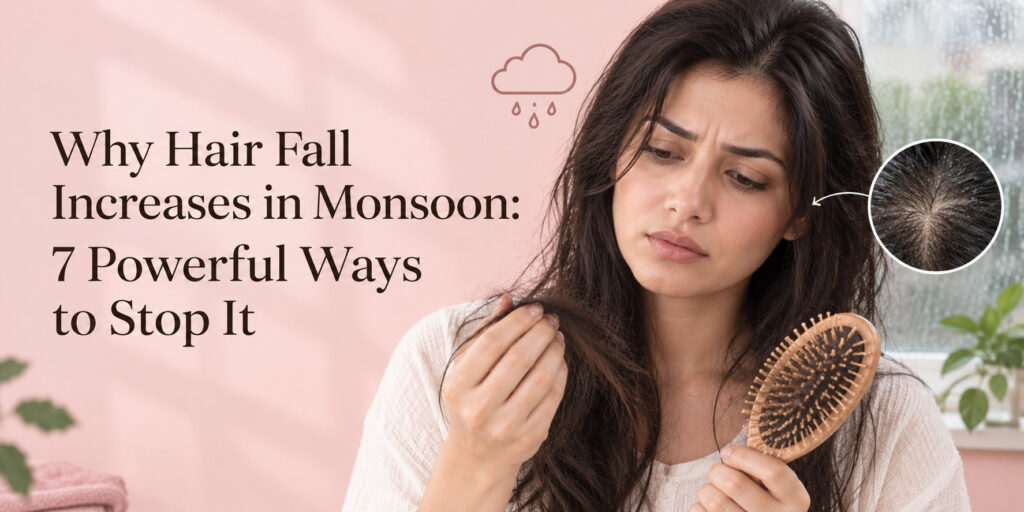
Monsoon hair fall is real, but it is rarely caused by rain itself. The season combines high humidity, a sweaty and oily scalp, fungal overgrowth, weaker wet hair, seasonal infections and dietary changes, and together these push more strands out of their growth cycle or snap them along the length. Some of the loss is a temporary seasonal shift, but some is a warning sign of dandruff, scalp infection, nutritional gaps or an underlying pattern like androgenetic hair loss. The best approach is to identify which type of fall you have, keep the scalp clean and balanced, handle wet hair gently, correct nutritional gaps and start medical treatment early if shedding persists. At AK Dermacare in West Delhi, Dr. Parul Garg assesses the pattern and cause of hair fall before recommending a plan, because breakage, scalp disease and true shedding need different solutions.
Key Takeaways
Is hair fall normal in monsoon? A mild rise is common, but shedding well beyond your usual level, or lasting more than 6 to 8 weeks, deserves a dermatologist’s attention.
What is the main cause? Usually a scalp problem: humidity-driven dandruff, fungal overgrowth or inflammation that weakens the hair at its root.
How often should I wash my hair? For most people, 2 to 3 times a week, and more often if the scalp is oily or sweaty.
When should I see a doctor? If you notice patches, scalp itching or scaling, a widening parting, or clumps of hair that do not settle within a couple of months.
Introduction
The first rains bring relief from the heat, and for many people they also bring a sudden, worrying sight: more hair in the comb, the shower drain and the pillow. Because it happens around the same time every year, it is easy to shrug off as “just the season”. Sometimes it is. Often, though, the monsoon exposes a scalp or hair problem that was already brewing, or triggers a delayed shedding episode that shows up weeks after the actual cause.
Understanding why the season is so hard on hair is the difference between waiting it out and actually fixing it. Below, we look at what changes in monsoon, how to tell the different kinds of hair fall apart, and seven practical ways to bring it under control.
Is It Shedding, Breakage or Something Else?
Not all hair fall is the same, and treating the wrong problem wastes time.
Normal shedding. Most people lose roughly 50 to 100 hairs a day as part of the natural cycle. Shed hairs usually have a tiny white bulb at the root.
Seasonal or triggered shedding. More hair than usual falls out across the whole scalp, often because a stressor pushed many follicles into the resting phase at once. This is called telogen effluvium.
Breakage. Hairs snap partway along the length and lack a bulb. This points to weak, dry, chemically treated or roughly handled hair rather than root problems.
Scalp-driven fall. Itching, flaking, redness, pimples or patches suggest dandruff, seborrhoeic dermatitis, folliculitis or a fungal infection affecting the follicle.
Pattern loss. A widening parting, receding temples or thinning crown suggests androgenetic hair loss, which the monsoon may simply make more noticeable.
Many people have a mix of these, which is why a proper assessment matters.
Why Hair Fall Increases in Monsoon
1. Humidity makes the scalp a breeding ground for fungus
Warm, damp air encourages Malassezia, a yeast that lives on every scalp. When it multiplies, it irritates the skin and produces dandruff and inflammation. An inflamed scalp gives weaker hair, and the itching that comes with it leads to scratching, which damages both skin and hair.
2. Sweat, oil and pollution build up faster
Humidity stops sweat from evaporating, so oil, dust and pollutants cling to the scalp. Clogged follicles can become inflamed or develop small pimples, and a dirty scalp makes it harder for hair to anchor well.
3. Wet hair is fragile hair
Hair swells when it absorbs water, and in that state the outer cuticle lifts and the strand is more likely to stretch and snap. Getting drenched in the rain, tying wet hair tightly or combing it roughly all add to breakage. Rainwater in cities also carries pollutants that leave hair rough and dull.
4. Frizz and tangling cause mechanical damage
Humid air pushes moisture into the hair shaft unevenly, causing frizz and tangles. Detangling those knots with force pulls out hair and breaks strands, especially in people with long, dry or coloured hair.
5. Seasonal infections can trigger delayed shedding
Fevers, viral illnesses, dengue, typhoid and other infections common in monsoon can push follicles into the resting phase. The hair does not fall right away. Shedding typically begins around two to three months after the illness, which is why people are often confused about the cause.
6. Diet and sunlight change
Street food and outside meals become less appealing or riskier in the rains, and irregular eating, skipped meals or lower protein intake can weaken the growth cycle. Less sunlight can also mean lower vitamin D levels, which are already low in many people.
7. Existing hair problems become more visible
If you already have early androgenetic thinning, an iron or thyroid issue or a scalp condition, monsoon stressors can speed it up or make it more obvious. What looks like a new problem is often an old one surfacing.
Seven Powerful Ways to Stop Monsoon Hair Fall
1. Start With the Right Diagnosis
The most powerful step is knowing what you are treating. Hair Fall Treatment in West Delhi from dandruff is managed differently from hair fall after fever, and both differ from pattern thinning. Using an anti-dandruff shampoo for a nutritional problem, or hair oil for a fungal scalp, does little.
A dermatologist will examine the scalp, check the hair pull pattern, look at the hairs under magnification (trichoscopy) and, when needed, order blood tests for iron, ferritin, vitamin D, vitamin B12 and thyroid function. At AK Dermacare, Dr. Parul Garg builds the plan around these findings rather than a generic prescription.
2. Keep the Scalp Clean, Not Stripped
A healthy scalp is the foundation of healthy hair, and monsoon calls for a slightly more frequent wash routine.
- Wash 2 to 3 times a week, or every other day if you sweat heavily or have an oily scalp.
- Use a mild, sulphate-light shampoo suited to your scalp type, and focus it on the scalp rather than the lengths.
- Rinse thoroughly, since leftover shampoo causes itching and flaking.
- Use conditioner only on the mid-lengths and ends.
- Wash soon after getting drenched in rain, especially in polluted city water.
Avoid the temptation to wash daily with harsh products in the hope of “cleaning out” the fall. Over-cleansing dries the scalp and can trigger more oil and irritation.
3. Treat Dandruff and Scalp Infections Early
Dandruff is one of the biggest hidden drivers of monsoon hair fall. Persistent flaking, itching or redness should be treated, not ignored.
Medicated shampoos containing ingredients such as ketoconazole, ciclopirox, zinc pyrithione or selenium sulfide are commonly used to control yeast overgrowth. Your dermatologist will tell you how often to use them and for how long, since they are most effective when used consistently for several weeks. Boils, pus-filled bumps, circular patches with broken hairs or thick scaling need a medical evaluation, as fungal or bacterial scalp infections can cause lasting damage if delayed.
Do not share combs, towels or caps, and dry towels in the sun or with a hot iron before reuse, because damp fabric harbours fungus.
4. Handle Wet Hair Gently
Because wet hair is at its weakest, small habits make a large difference.
- Pat hair dry with a soft cotton towel or old T-shirt rather than rubbing.
- Never comb tangled wet hair from the roots. Detangle from the ends upward with a wide-toothed comb.
- Do not tie wet hair into tight ponytails or buns.
- Allow hair to dry fully before sleeping, since a damp pillow encourages scalp fungus.
- Carry an umbrella or cap, and rinse hair with clean water if you get caught in the rain.
- Keep hair oiling light and brief. Heavy oil left on overnight in humid weather can trap dirt and worsen dandruff for some scalps.
Avoid heat styling, bleaching, smoothing and colouring during peak monsoon if your hair is already falling, as damaged hair has less resilience.
5. Feed the Follicle From the Inside
Hair is a fast-growing tissue and reacts quickly to what you eat. A balanced monsoon plate supports the growth cycle and helps recovery after illness.
- Protein: Eggs, dals, paneer, curd, fish, chicken and sprouts supply the amino acids hair is made from.
- Iron and vitamin C: Leafy greens, legumes and citrus fruit help maintain iron levels, and vitamin C improves absorption.
- Zinc and healthy fats: Nuts, seeds and pulses support scalp health and hair strength.
- Vitamin D and B12: Often low in urban populations. Test first and correct only if needed.
Stay hydrated, eat freshly cooked meals and avoid crash diets, which are a well-known trigger for shedding. Supplements can help when a deficiency is confirmed, but taking them blindly rarely fixes hair fall and some, such as very high-dose biotin, can interfere with lab results.
6. Use Medical Treatments When Shedding Persists
If hair fall continues beyond a couple of months, or if you see thinning at the parting or crown, seasonal care alone will not be enough. A dermatologist may recommend treatments such as:
- Topical minoxidil: Helps prolong the growth phase and thicken miniaturised hairs. It needs consistent, long-term use.
- Oral medication: In selected patients, prescription treatment may be appropriate after a proper evaluation.
- PRP (platelet-rich plasma): Uses growth factors from your own blood to stimulate weakened but active follicles, and is often used in early to moderate thinning.
- Mesotherapy and other scalp treatments: Sometimes used to support follicle health as part of a wider plan.
These options work best when started early, while follicles are still active, and when paired with correction of the underlying cause. At AK Dermacare, Dr. Parul Garg selects and combines treatments according to the stage and type of hair loss rather than defaulting to one approach for every patient.
7. Manage Stress, Sleep and Lifestyle
Stress is a well-established trigger for shedding, and the disruption of monsoon routines, from long commutes to irregular sleep, can add to it. Aim for 7 to 8 hours of sleep, keep a regular meal schedule and build in some movement, whether a walk, yoga or stretching. Avoid smoking, which harms circulation to the scalp, and keep excess alcohol in check.
Also pay attention to your environment. Change pillowcases weekly, keep combs and brushes clean, dry your scalp properly after workouts and avoid wearing damp caps or helmets for long periods.
Quick Monsoon Hair Care Guide
| Concern | What to do | What to avoid |
| Oily, sweaty scalp | Wash every 2 to 3 days with a mild shampoo | Daily harsh cleansing |
| Dandruff or itching | Medicated shampoo as advised | Scratching and heavy oils |
| Frizz and tangles | Wide-toothed comb, light serum on ends | Combing wet hair roughly |
| Rain exposure | Rinse and dry hair soon after | Leaving damp hair tied up |
| Post-illness shedding | Balanced diet, test for deficiencies | Panic products and crash diets |
| Ongoing thinning | See a dermatologist early | Waiting a year to seek help |
Common Monsoon Hair Care Mistakes
- Assuming all hair fall is seasonal and will stop on its own
- Applying oil on a flaky, itchy scalp and leaving it overnight
- Washing too rarely because it feels like the hair is falling more when wet
- Using several new products at once, which makes it impossible to see what is working
- Starting supplements without testing
- Ignoring patches, pus-filled bumps or intense itching
When to See a Dermatologist
Book a consultation if:
- Hair fall lasts more than 6 to 8 weeks
- You see round patches, thinning at the parting or a receding hairline
- The scalp is itchy, painful, red, scaly or has boils
- Shedding began after a fever, surgery, childbirth or major stress
- You have other symptoms such as fatigue, weight change or irregular periods, which may point to thyroid or hormonal problems
Early assessment prevents temporary shedding from becoming long-standing thinning and helps you avoid months of trial and error.
Final Thoughts
Monsoon does not usually destroy hair, but it stresses the scalp, weakens wet strands and unmasks problems that were quietly developing. The most effective response is a calm, consistent one: a clean and balanced scalp, gentle handling of wet hair, a nourishing diet, prompt treatment of dandruff or infection and medical help when shedding does not settle. Most seasonal hair fall improves once the cause is addressed, and most lasting thinning is far easier to treat when it is caught early.
At AK Dermacare in West Delhi, Dr. Parul Garg evaluates each patient’s scalp, hair loss pattern and possible triggers before recommending treatment, so the plan fits the cause rather than the season. If your hair fall has been worrying you this monsoon, an early consultation is the simplest step toward stopping it.
Frequently Asked Questions (FAQs)
1. Why does my hair fall so much in monsoon?
Humidity encourages dandruff and fungal growth, sweat and pollution clog the scalp, and wet hair breaks more easily. Seasonal infections and dietary changes can also trigger shedding. The exact cause differs from person to person, which is why examination helps.
2. How long does monsoon hair fall last?
Mild seasonal shedding typically settles within a few weeks once the scalp is healthy and the trigger is addressed. If it continues beyond 6 to 8 weeks, or is accompanied by thinning or scalp symptoms, see a dermatologist.
3. Can I oil my hair in monsoon?
Light oiling for a short time before washing is fine for most people. Leaving heavy oil on overnight in humid weather can trap dirt and worsen dandruff, particularly in those with an oily or flaky scalp.
4. Does rainwater cause hair fall?
Rainwater itself is not the direct cause, but in cities it can carry pollutants and leave hair rough. Staying wet for long, or tying damp hair, adds to breakage and scalp problems. Rinse and dry your hair soon after getting drenched.
5. Can PRP help with monsoon hair fall?
PRP can help when hair fall is linked to early thinning and the follicles are weakened but still active. It is less useful for shedding caused by infection or breakage, which need different treatment, so a proper diagnosis comes first.