
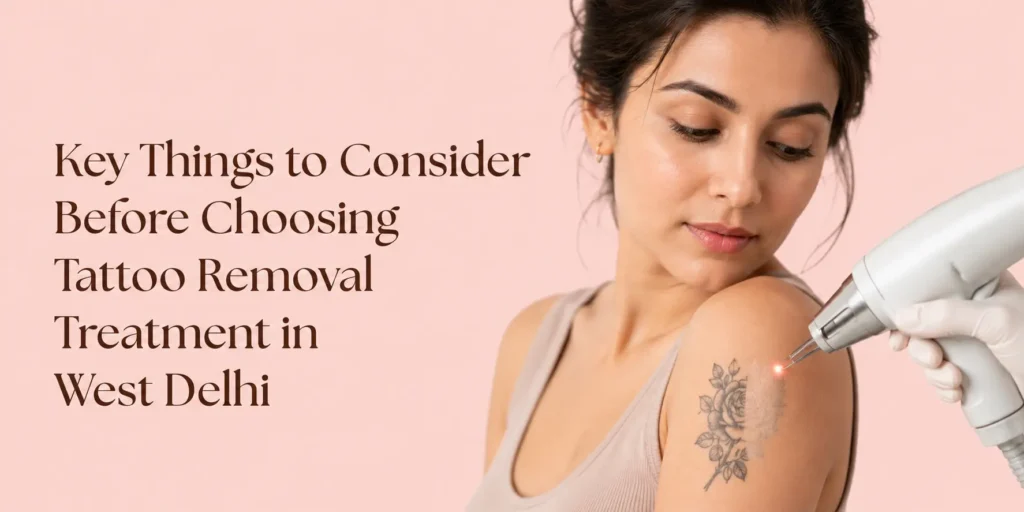
Choosing tattoo removal treatment in West Delhi is not as straightforward as booking a session and showing up. The results depend heavily on the technology used, the experience of the specialist performing the treatment, the characteristics of the tattoo being removed, and how well the skin is managed between sessions. At AK Dermacare in West Delhi, Dr. Parul Garg provides medically guided laser tattoo removal in West Delhi with realistic assessments, appropriate technology, and a treatment plan built around each patient’s skin and tattoo, not a one-size-fits-all approach.
Key Takeaways
What should I consider before getting tattoo removal treatment?
The type of laser used, the experience of the specialist, the age and ink colours of the tattoo, your skin type, the number of sessions realistically required, and the aftercare commitment. Each of these affects whether removal is complete, partial, or complicated by side effects.
How many sessions are needed for tattoo removal?
Most tattoos require between six and twelve sessions, spaced six to eight weeks apart. Professional tattoos with dense, layered ink, or those containing certain colours, may require more. Amateur tattoos with lighter ink typically need fewer sessions.
How much does tattoo removal cost in Delhi?
Cost varies by tattoo size, ink density, colours present, number of sessions required, and the technology used. A per-session estimate is less meaningful than a total treatment plan estimate, which a qualified specialist can provide after assessment.
Introduction
The decision to remove a tattoo is rarely impulsive. Most people arrive at it after considerable thought, and by the time they begin researching options, they are already committed to the outcome. What they are less prepared for is the complexity of the process itself.
Laser tattoo removal in West Delhi is widely available, which means the quality of what is available varies enormously. A treatment performed with the right laser by a trained specialist on a correctly assessed skin type produces progressive, safe removal with manageable side effects. The same treatment performed with outdated equipment, without proper skin assessment, or without adequate spacing between sessions can result in incomplete removal, textural changes, scarring, or pigmentation problems that are more difficult to address than the original tattoo.
The difference between a good outcome and a poor one is almost entirely in what happens before the first session. This guide covers the key considerations that anyone exploring tattoo removal treatment in West Delhi should understand before committing to a clinic or a course of treatment.
1. Understand How Laser Tattoo Removal Actually Works
Before evaluating clinics or comparing prices, understanding the mechanism of laser tattoo removal helps set realistic expectations.
Laser tattoo removal works by delivering short, high-energy pulses of light into the skin at wavelengths that are selectively absorbed by tattoo ink. The energy shatters the ink particles into smaller fragments, which the immune system then clears through the lymphatic system over the following weeks. Each session breaks down another layer of ink. The body does the removal. The laser creates the conditions for it.
This is why results build gradually across sessions rather than appearing immediately after the first treatment, and why spacing between sessions matters as much as the sessions themselves. The immune system needs time to clear the fragmented ink before the next session is productive.
The gold standard technology for tattoo removal is the Q-switched Nd:YAG laser or its more advanced iteration, the picosecond laser. Picosecond lasers deliver energy in trillionths of a second rather than nanoseconds, shattering ink into finer particles that the body clears more efficiently, with fewer sessions and lower risk of thermal side effects on surrounding tissue. At AK Dermacare, treatment is performed with clinically validated laser technology appropriate to each tattoo’s characteristics.
2. The Tattoo Itself Determines a Lot
Not all tattoos respond to removal equally. Before committing to a treatment plan, a qualified tattoo removal specialist in Delhi will assess several tattoo-specific factors that directly affect how the removal will progress.
Age of the tattoo
Older tattoos have already undergone some natural ink fading as the immune system has partially broken down particles over time. They tend to respond faster to laser treatment than fresh tattoos, which have dense, intact ink deposits.
Professional vs amateur
Professional tattoos are applied with consistent depth and high ink density, which typically requires more sessions but responds predictably. Amateur tattoos are applied inconsistently, often at irregular depths, which can make them respond unevenly.
Ink colours
This is one of the most significant variables. Black and dark blue inks absorb laser energy most efficiently and respond fastest. Green, light blue, yellow, and white inks are significantly more difficult to remove because they do not absorb the standard laser wavelengths as readily. A tattoo containing multiple colours may require different laser wavelengths within the same treatment course, and some colours may never achieve complete removal.
Tattoo location
Areas with better circulation, such as the upper body, respond faster than extremities like the feet and ankles, where lymphatic drainage is slower and immune clearance of fragmented ink takes longer.
Ink layering and cover-ups
Cover-up tattoos, where new ink has been applied over an existing tattoo, present the most complex removal challenge. Multiple layers of ink at different depths require significantly more sessions and may not achieve complete removal in all cases.
3. Your Skin Type Matters
The risk profile of laser tattoo removal differs depending on skin type. This is where the choice of specialist and the calibration of the laser settings become critical.
In darker skin tones, which are common across the Delhi population, the melanin in the skin competes with the tattoo ink for laser energy absorption. This means that aggressive settings that clear ink efficiently in lighter skin can cause post-inflammatory hyperpigmentation or, in the worst case, hypopigmentation in darker skin. A specialist who adjusts laser settings conservatively for skin type, uses appropriate cooling, and spaces sessions adequately reduces this risk significantly.
At a tattoo removal skin clinic in Delhi that does not perform a skin type assessment before treatment, this risk is frequently underestimated. The Fitzpatrick scale is the standard clinical tool for categorising skin type and guiding laser parameter selection. Ask whether this assessment is performed before any treatment begins.
4. How Many Sessions Are Realistically Required
The number of sessions required for complete or significant tattoo removal is one of the most commonly misrepresented aspects of the process. Clinics advertising removal in three to four sessions are either referring to very small, lightly inked amateur tattoos or setting expectations that the treatment cannot consistently meet.
A realistic framework based on the Kirby-Desai scale, which is the clinical tool used to estimate session requirements, takes into account skin type, tattoo location, ink colours, amount of ink, scarring or layering, and whether the tattoo is professional or amateur. For most professional tattoos on patients with medium to darker skin tones, the honest estimate is six to twelve sessions, and for complex or multi-coloured tattoos, more.
Sessions must be spaced a minimum of six to eight weeks apart to allow the immune system to complete its clearance of fragmented ink before the next session is useful. Compressing the schedule does not accelerate results. It increases the risk of side effects without improving the rate of removal.
A qualified tattoo removal specialist in Delhi will give you a session estimate range based on their assessment of your specific tattoo, not a number optimised to close a sale.
5. What to Ask Before Choosing a Clinic
The availability of laser tattoo removal in West Delhi ranges from specialist dermatology clinics with medical oversight to aesthetic salons with limited clinical training. The questions below help distinguish between them.
What laser technology is being used?
Q-switched Nd:YAG and picosecond lasers are the clinical standard. Intense pulsed light (IPL) is not appropriate for tattoo removal. If the clinic cannot name the specific device, that is a significant red flag.
Who is performing the treatment?
Laser tattoo removal should be performed or directly supervised by a qualified dermatologist or laser specialist. Treatment performed by an unqualified technician without medical oversight increases both the risk of side effects and the likelihood of inadequate results.
Is a patch test performed?
A patch test on a small area of the tattoo before committing to a full session allows the specialist to assess the skin’s response to the laser settings and adjust accordingly. It is standard practice at a reputable clinic.
What does the aftercare protocol involve?
Post-treatment aftercare, including wound care, sun avoidance, and monitoring for adverse reactions, is an integral part of the process, not an afterthought. A clinic that provides detailed aftercare instructions and follow-up is one that treats the process as a medical procedure.
6. Aftercare Is Not Optional
The skin after a laser tattoo removal session has experienced a controlled injury. It will be red, may blister, and will require consistent care to heal correctly and minimise the risk of pigmentation changes or infection.
The key aftercare principles following tattoo removal treatment in West Delhi are:
- Keep the treated area clean and moisturised with a gentle, fragrance-free product
- Do not pick at blistering or peeling skin. This is the most common cause of scarring after laser removal
- Avoid sun exposure on the treated area for a minimum of four to six weeks post-session, and apply SPF 50 PA+++ whenever the area is exposed
- Avoid swimming, saunas, and heavy exercise for the first forty-eight to seventy-two hours after each session
- Report any unexpected reactions, excessive blistering, or signs of infection to the treating clinic promptly
Patients who do not follow aftercare instructions consistently tend to have slower clearing, higher pigmentation risk, and in some cases, textural changes that would not have occurred with correct post-treatment management.
7. Cost: What You Are Actually Paying For
Tattoo removal cost in Delhi varies and is legitimately difficult to compare across clinics without understanding what the price reflects. A lower per-session cost at a clinic using older technology or without qualified medical oversight may result in more sessions required, higher side effect risk, and in some cases, outcomes that require additional dermatological treatment to correct.
The meaningful unit of cost is not the per-session price. It is the total cost of achieving your desired outcome, factoring in the realistic number of sessions, the quality of the technology, and the expertise of the person performing the treatment. At AK Dermacare, consultations include a clear, honest assessment of what your specific tattoo requires and what the full course of treatment realistically involves.
Final Thoughts
Tattoo removal treatment in West Delhi is widely available, but high-quality, medically supervised tattoo removal with realistic outcomes is a more specific thing to find. The considerations covered in this guide, the laser technology, the specialist’s qualifications, the tattoo’s characteristics, the skin type assessment, the session estimate, and the aftercare commitment, are not due diligence for the anxious. They are the factors that determine whether removal goes well or not.
At AK Dermacare, Dr. Parul Garg combines advanced laser technology with the diagnostic rigour of a qualified dermatologist to deliver laser tattoo removal in West Delhi that is safe, progressive, and honest about what each patient’s tattoo requires. As the trusted tattoo removal skin clinic in Delhi for patients across West Delhi and beyond, AK Dermacare‘s approach is the same as with every skin treatment: assess first, treat specifically, and support the skin through every stage of the process.
Frequently Asked Questions (FAQs)
1. What should I consider before getting tattoo removal treatment?
The type of laser used, whether the treatment is performed or supervised by a qualified dermatologist, your skin type and its implications for laser settings, the age and ink composition of your tattoo, a realistic session estimate, and your ability to commit to aftercare and session spacing. Each of these directly affects the safety and outcome of the treatment.
2. How many sessions are needed for tattoo removal?
Most professional tattoos require between six and twelve sessions, spaced six to eight weeks apart. Amateur or older tattoos may need fewer. Multi-coloured or cover-up tattoos may need more. A qualified specialist will provide a range based on assessment of your specific tattoo, not a fixed number that applies to all cases.
3. How much does tattoo removal cost in Delhi?
Cost depends on tattoo size, ink density and colour, the number of sessions required, and the technology and expertise at the clinic. Rather than comparing per-session prices, ask for a total treatment plan estimate based on your tattoo’s assessment. At AK Dermacare, this is part of the initial consultation.
4. Does laser tattoo removal hurt?
Most patients describe the sensation as similar to a rubber band snapping against the skin repeatedly. The level of discomfort varies depending on the tattoo location, the laser parameters, and individual pain tolerance. Topical anaesthetic cream applied before the session significantly reduces discomfort and is standard practice at AK Dermacare.
5. Can all tattoo colours be completely removed?
Black and dark blue inks respond most completely to laser removal. Green, light blue, yellow, and white inks are significantly more resistant and may require additional sessions or different laser wavelengths. In some cases, certain colours achieve significant fading rather than complete removal. A specialist will be honest with you about which colours in your tattoo are likely to clear fully and which may not.