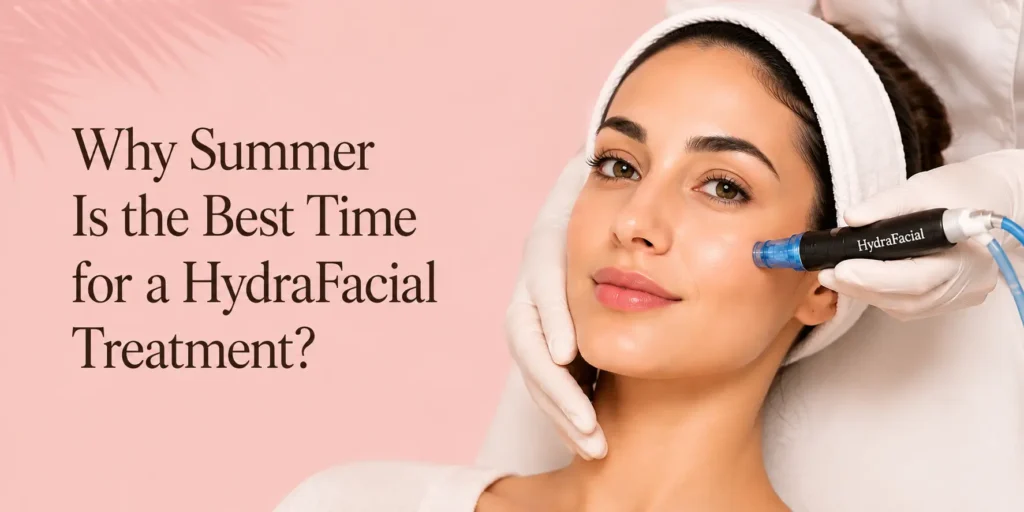
Summer heat, sweat, sun exposure, and pollution place unique stress on the skin, making it the ideal season for a HydraFacial Treatment in West Delhi. HydraFacial deep-cleans, exfoliates, and hydrates in a single session with zero downtime, directly addressing the excess oil, clogged pores, tanning, and dullness that summer weather causes. At AK Dermacare, Dr. Parul Garg recommends HydraFacial as a seasonal skin reset because it repairs sun-related damage while restoring hydration lost to heat and humidity.
Key Takeaways
- Can I go in the sun after a HydraFacial? Yes, HydraFacial does not require avoiding sun exposure immediately afterward, though broad-spectrum sunscreen should always be applied, and extended, unprotected sun exposure should be limited for the first 24 to 72 hours to protect the results.
- Does HydraFacial help remove tan? Yes, HydraFacial reduces superficial tan and improves overall skin luminosity by exfoliating the tanned surface layer and infusing brightening serums.
- Can teenagers get a HydraFacial? Yes, HydraFacial can be beneficial for teenagers dealing with acne and clogged pores, but it should be done under the supervision of a dermatologist or skin specialist.
- How long does a HydraFacial glow last? The glow typically lasts around 3 to 4 weeks with proper skincare maintenance, which is why many people schedule it as a monthly summer treatment.
Why Summer Is Different for Skin
Summer brings a distinct set of skin challenges that most home routines struggle to fully address. Heat and humidity increase sweating and oil production, which combine with pollution and dead skin cells to clog pores more aggressively than in cooler months. At the same time, UV exposure accelerates surface dullness, uneven tone, and oxidative stress on the skin, while air conditioning indoors creates the opposite problem of dehydration and tightness.
This push-and-pull between excess oil outdoors and dehydration indoors is unique to summer, and it is part of why dullness, excess oil, clogged pores, uneven texture, and superficial tanning are some of the most common skin concerns dermatologists see during this season. Most people respond by either over-cleansing, which strips the skin further, or over-moisturising, which can worsen congestion. Neither approach corrects the underlying imbalance.
A HydraFacial Treatment in West Delhi is uniquely suited to this seasonal pattern because it combines deep cleansing, exfoliation, and hydration in one session rather than requiring multiple separate products or treatments that can conflict with each other. Instead of choosing between oil control and hydration, HydraFacial addresses both simultaneously.
What Makes HydraFacial Ideal for Summer
HydraFacial works through a multi-step process that directly targets the way summer weather affects the skin.
- Deep cleansing and exfoliation removes the excess oil, sweat, dirt, and dead skin cells that accumulate more heavily in hot, humid weather, leaving pores visibly cleaner and reducing the likelihood of breakouts.
- Painless extraction uses vacuum-based technology to clear whiteheads and blackheads without squeezing or irritating the skin, which is especially useful when summer breakouts are more frequent and more inflamed.
- Antioxidant and hyaluronic acid infusion delivers vitamin-rich serums that replenish moisture and defend the skin against free radical damage caused by increased UV exposure and heat-driven oxidative stress.
- No downtime, meaning results are visible almost immediately, making it practical for people with busy summer schedules, travel plans, or upcoming events such as weddings, holidays, or outdoor celebrations.
This is why HydraFacial for glowing skin is one of the most requested summer treatments: it produces a visible, natural radiance without requiring recovery time, and it can be safely repeated more frequently than more intensive resurfacing treatments during the peak heat months.
The Summer Skin Problems HydraFacial Solves
| Summer Skin Issue | Why It Happens | How HydraFacial Helps |
| Excess oil and shine | Heat and humidity increase sebum production | Deep cleansing removes surface oil buildup |
| Clogged pores and breakouts | Sweat mixes with sunscreen, dirt, and dead skin | Vacuum-based extraction clears pores gently |
| Dullness and uneven tone | UV exposure and oxidative stress | Antioxidant infusion restores radiance |
| Superficial tanning | Cumulative sun exposure | Exfoliation and brightening serums lift tan |
| Dehydration despite oiliness | AC indoors, heat outdoors | Hyaluronic acid infusion rebalances hydration |
This table reflects why HydraFacial is often described as a seasonal reset rather than a single-purpose facial. It does not just treat one summer symptom; it addresses the combination of issues that tend to appear together during the hotter months.
Does HydraFacial Help Remove Tan
Yes. HydraFacial helps reduce superficial tanning and improves overall skin luminosity by exfoliating away the outer, sun-affected layer of skin and infusing brightening, antioxidant-rich serums underneath. The exfoliation step lifts dead, tanned surface cells, while the serum infusion works to calm inflammation and support a more even tone underneath.
It is important to understand that this addresses surface-level tan and dullness effectively, but deeper or more stubborn pigmentation, such as melasma or long-standing sun spots, may need additional dermatologist-guided treatment such as laser toning or medical-grade peels. For anyone experiencing seasonal dullness or a patchy tan from sun exposure, HydraFacial for dull skin offers a quick, non-invasive way to restore brightness before pigmentation becomes more established and harder to treat.
Can I Go in the Sun After a HydraFacial
You can resume your daily activities and go outside after a HydraFacial, and it does not strictly require you to stay indoors afterward, unlike more intensive procedures. That said, the skin is slightly more sensitive and more permeable immediately following treatment, so a few precautions matter:
- Apply broad-spectrum sunscreen every time you step out, as this protects both your skin and your results.
- Avoid extended, unprotected sun exposure for the first 24 to 72 hours after treatment.
- Avoid any tanning procedures for at least two weeks following the session.
- Reapply sunscreen every two to three hours if spending extended time outdoors, since summer UV intensity is significantly higher than in other seasons.
This makes HydraFacial genuinely convenient for summer, since it does not require the kind of downtime or sun-avoidance that more intensive treatments like peels or laser sessions often do. Many patients schedule their HydraFacial before a beach holiday, outdoor wedding, or festival specifically because it allows them to step outside with confidence right after.
Can Teenagers Get a HydraFacial
Yes, HydraFacial can be a helpful option for teenagers, particularly those struggling with acne, clogged pores, or oily summer skin that worsens during school holidays and outdoor activity. Teenage skin often produces more oil due to hormonal changes, and summer heat compounds this, making breakouts more frequent.
However, HydraFacial for teenagers is best done under the guidance of a dermatologist or trained skin specialist who can assess whether the skin is ready for the treatment and adjust the intensity of exfoliation and extraction accordingly. Teenage skin can be more reactive, and active acne may need a modified protocol rather than the standard adult treatment.
How Long Does a HydraFacial Glow Last
The glow from a single HydraFacial session generally lasts around 3 to 4 weeks when followed by proper at-home skincare, including consistent hydration and daily SPF use. The exact duration depends on lifestyle factors as well, since someone spending several hours daily in direct sun, heavy sweat, or pollution will likely see the glow fade faster than someone maintaining a more protected routine.
Because of this timeline, many people book HydraFacial as a monthly summer maintenance treatment rather than a one-time fix, especially when heat and sun exposure continue to stress the skin throughout the season. Pairing the treatment with a consistent home routine, including gentle cleansing, hydration, and sunscreen, helps extend the visible results between sessions.
Who Benefits Most From a Summer HydraFacial
HydraFacial is suitable for all skin types and tones, which makes it accessible to a wide range of summer skin concerns. It is particularly useful for:
- Oily or acne-prone skin dealing with increased summer breakouts
- Dull, tired-looking skin affected by heat and pollution
- Mild sun-related tanning and uneven tone
- Dehydrated skin caused by heat, sweating, or air conditioning
- Anyone preparing for a summer event, wedding, or vacation who wants immediate, visible radiance
- Combination skin that swings between oily and dehydrated depending on time spent indoors versus outdoors
HydraFacial Treatment Cost in West Delhi
The HydraFacial Treatment Cost in West Delhi depends on several factors rather than a flat, universal price:
- Whether the session is a basic HydraFacial or includes add-ons such as boosting serums, LED therapy, or targeted brightening treatments for tan
- The clinic’s technology and whether the treatment is performed under dermatologist supervision, which affects both safety and the quality of serums used
- The number of sessions booked, since many people opt for a seasonal package covering multiple summer months rather than a single visit
- The specific skin concern being addressed, since tan removal or acne-focused protocols may require slightly different serum combinations than a standard glow treatment
At AK Dermacare, exact pricing for a HydraFacial Treatment in West Delhi is confirmed after an in-person consultation with Dr. Parul Garg, since the ideal protocol, including any add-on serums for tanning, dullness, or acne, depends on the specific skin concern being addressed that season.
Why Choose AK Dermacare for a Summer HydraFacial
HydraFacial can be customised with different serums and settings depending on the skin’s specific summer concern, choosing a dermatologist-led clinic matters more than choosing based on price alone. At AK Dermacare, Dr. Parul Garg tailors each HydraFacial session, adjusting exfoliation intensity, extraction focus, and infused serums, based on whether the primary concern is oiliness, tanning, dullness, or dehydration, rather than offering a single generic protocol to every patient.
This personalised approach is what makes a HydraFacial Treatment in West Delhi at AK Dermacare more effective during summer months, when skin concerns often overlap and require a more tailored response than a standard facial can provide. Dr. Parul Garg also advises patients on how to maintain results between sessions with the right home care, ensuring the benefits of each summer HydraFacial last as long as possible.
Final Thoughts
Summer’s combination of heat, sweat, UV exposure, and pollution makes it one of the most demanding seasons for skin health, and also one of the seasons where HydraFacial delivers its most visible benefits. With no downtime, immediate glow, and the ability to address oiliness, tanning, dullness, and dehydration in a single session, HydraFacial fits naturally into a busy summer schedule.
At AK Dermacare in West Delhi, Dr. Parul Garg builds each HydraFacial session around the skin’s actual seasonal needs, helping patients maintain healthy, radiant skin right through the hottest months of the year. Whether the goal is tan correction, acne control, or simply a reliable monthly glow, a well-planned summer HydraFacial routine can be one of the most effective and low-effort ways to keep skin looking its best.
Frequently Asked Questions (FAQs)
1. Can I go in the sun after a HydraFacial?
Yes, you can resume normal activities immediately, but sunscreen is essential and extended, unprotected sun exposure should be limited for 24 to 72 hours to protect your results.
2. Does HydraFacial help remove tan?
Yes, it reduces superficial tanning and improves skin luminosity through exfoliation and brightening serum infusion, though deeper pigmentation may need additional dermatologist-guided treatment.
3. Can teenagers get a HydraFacial?
Yes, it can help with teenage acne and clogged pores, but it should always be done under dermatologist or specialist supervision to ensure the protocol suits younger, more reactive skin.
4. How long does a HydraFacial glow last?
The glow typically lasts 3 to 4 weeks with proper skincare maintenance, which is why many people book it as a recurring monthly summer treatment.