
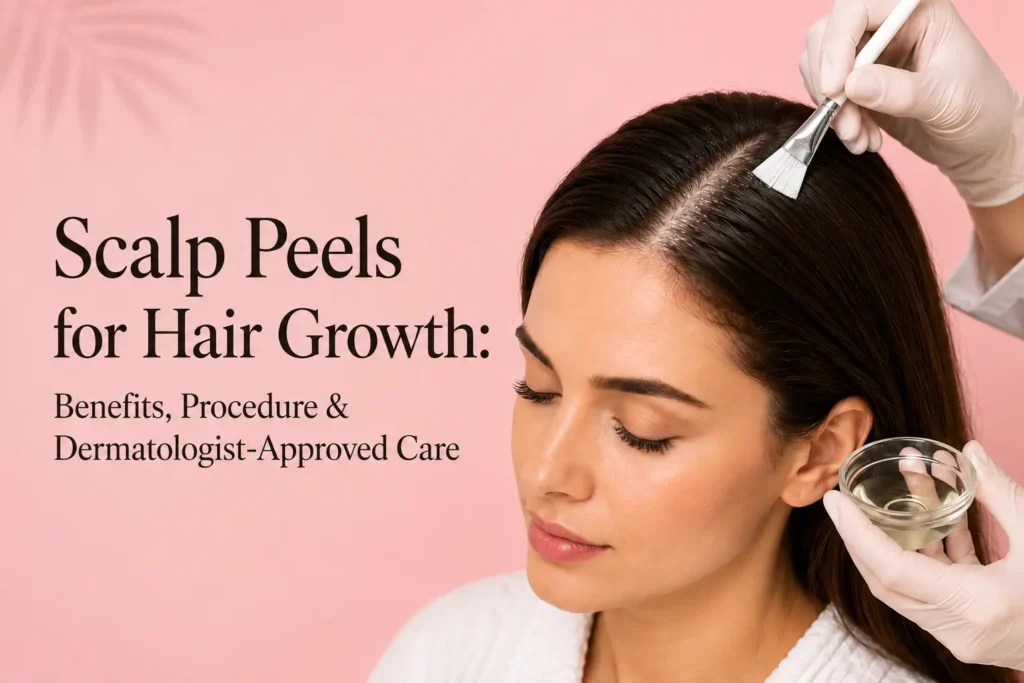
Scalp peels exfoliate the scalp to remove excess oil, dead skin cells, and product buildup that clog hair follicles, creating a cleaner environment that supports stronger, healthier hair growth. They are especially effective for oily scalps, dandruff, and follicle blockage, but frequency and formulation need to be matched to each scalp type to avoid irritation. At AK Dermacare in West Delhi, Dr. Parul Garg offers scalp peel treatment in West Delhi customised to the patient’s scalp condition and hair fall pattern rather than a one-size-fits-all exfoliation routine.
Key Takeaways
- Does scalp peel help hair growth? Yes, by unclogging follicles, improving circulation, and creating a balanced environment where hair can grow stronger and thicker.
- How often should you get a scalp peel? Generally once a week for oily scalps and once every two weeks for dry or sensitive scalps, adjusted based on how the scalp responds.
- Is scalp peel safe for sensitive scalp? Yes, when formulated correctly with soothing ingredients and used at a lower frequency, though sensitive scalps should always start conservatively.
- Can scalp peels reduce dandruff? Yes, particularly formulations with salicylic acid, which have antifungal and anti-inflammatory properties that target the yeast overgrowth linked to dandruff.
What Is a Scalp Peel?
Just as skincare peels rejuvenate facial skin, scalp peels work to exfoliate the scalp, removing buildup, excess oils, and dead skin cells, creating an ideal environment for healthier hair growth. Most formulations use mild acids like salicylic, glycolic, or lactic acid to dissolve excess oil and dead skin cells that can clog hair follicles and lead to irritation.
The scalp is genuinely skin, with pores and sebaceous glands, and it requires the same kind of deep cleansing that facial skin needs. Dermatologists describe scalp peels as skincare for the scalp: they cleanse by removing build-up and dead skin, and help serums penetrate more effectively afterward. When oil, sweat, styling residue, and dead cells accumulate on the scalp without proper exfoliation, hair follicles become obstructed, gas exchange at the skin surface is reduced, and the effectiveness of any topical hair growth product applied afterward drops significantly.
A hair growth scalp treatment in West Delhi built around scalp peeling addresses this buildup directly, rather than only treating the visible symptoms of thinning or dull hair with surface-level products.
Does Scalp Peel Help Hair Growth?
The mechanism works through several connected pathways rather than a single effect.
- Improved follicle health: when hair follicles are clogged, hair growth can be stunted, and in some cases, hair loss may worsen. Scalp peels target this buildup directly, freeing follicles from obstructions and creating a clean slate that stimulates the growth of stronger, healthier hair strands.
- Enhanced blood circulation: scalp peels, particularly when paired with a gentle massage, boost blood circulation in the scalp. Enhanced blood flow, direct stimulation of hair follicles, and growth factors help shift hair from the resting (telogen) phase into the active growth (anagen) phase, supporting new hair growth.
- Balanced oil production: too much oil leaves hair greasy and heavy, while a dry scalp leads to flakes and irritation. Scalp peels help maintain the right balance, ensuring the scalp is neither too oily nor too dry, which creates a healthier environment that encourages better hair growth.
- Better absorption of active ingredients: removing dead skin cells allows hair growth serums, minoxidil, and biorevitalizing treatments to penetrate more effectively, since a clogged surface significantly reduces how well these products work.
- Detoxification: peels effectively cleanse the scalp from product buildup, environmental pollutants, and excess oils, which is particularly beneficial for people prone to scalp acne or folliculitis.
Many trichologists describe scalp exfoliation as a foundational step rather than an optional add-on. One rehabilitation specialist noted that she begins almost every hair growth stimulation protocol with a deep peel, describing it as a step that should not be skipped if the goal is real results rather than a temporary effect. Peels also activate regenerative processes, stimulate fibroblast activity, and improve microcirculation, forming a healthier dermal and vascular structure that supports growing stronger, denser hair.
The Science Behind Scalp Condition and Hair Growth
Clinical research increasingly supports the idea that the condition of the scalp directly impacts hair growth and retention. Published findings in the Journal of Clinical Medicine indicate that hair can be affected even prior to emerging from the follicle, and oxidative stress at the scalp level appears to play a meaningful role in premature hair loss. This reinforces why treating the scalp itself, not just the visible hair shaft, is an important part of any comprehensive hair fall scalp treatment.
How a Scalp Peel Procedure Works
A professional scalp peel session at a dermatology clinic typically follows a structured process:
- Assessment: the scalp is examined to identify oiliness, dandruff, sensitivity, or specific hair fall patterns before selecting the peel formulation.
- Application: a chemical exfoliant, often containing salicylic, glycolic, or lactic acid, or in some formulations bromelain and urea, is applied evenly across the scalp.
- Dwell time: the solution is left on for a set period, allowing it to break down oil, dead skin, and buildup.
- Gentle massage: massage during or after application improves blood circulation and helps loosen residue from the follicles.
- Rinse and soothe: the scalp is thoroughly cleansed, often followed by a calming or hydrating serum to reduce any post-treatment sensitivity.
The formulation used varies significantly depending on scalp type. Oily, dandruff-prone scalps often respond well to salicylic acid-based peels, while drier or more sensitive scalps may need gentler, hydrating formulations built around ingredients like aloe vera, birch juice, or niacinamide to minimise irritation while still cleansing effectively.
How Often Should You Get a Scalp Peel?
Frequency depends heavily on scalp type, and overdoing it can backfire.
| Scalp Type | Recommended Frequency |
| Oily scalp | 1 to 2 times a week |
| Normal scalp | Once a week to once every 2 weeks |
| Dry or sensitive scalp | Once every 2 weeks |
| Dandruff/seborrheic scalp | 1 to 2 times a week, based on severity |
Some clinics recommend starting new patients on a slightly more frequent schedule, roughly once every two weeks, and then adjusting to once every four weeks once the scalp is less oily or congested. Over-exfoliation can disrupt the scalp’s protective barrier, leading to itching, flakiness, redness, and paradoxically, more dandruff. Starting with a lower frequency and adjusting based on how the scalp responds is generally the safer approach, and this is exactly why professional guidance matters more than following a generic online schedule.
Is Scalp Peel Safe for Sensitive Scalp?
Scalp Peel is safe for sensitive scalp but with important caveats. Scalp peels can be formulated specifically for problematic and hypersensitive skin, often using calming ingredients like aloe vera juice and birch juice to hydrate, reduce itching, and minimise irritation risk, alongside niacinamide to reduce oiliness and inflammatory response. These gentler, clinically tested formulations are frequently used for sensitive scalp with hair loss of various causes, psoriasis, all types of dandruff, seborrheic dermatitis, and hyperkeratosis of the scalp.
That said, sensitive scalps should never jump straight into aggressive or frequent peeling. The safest approach is to:
- Start with the lowest recommended frequency and a mild, hypoallergenic formulation
- Patch test or trial on a small scalp area first if trying an at-home product
- Watch for signs of irritation such as burning, excessive redness, or flaking after treatment
- Have a dermatologist assess the scalp condition first, particularly if there is existing inflammation, psoriasis, or an active skin condition, since some conditions like psoriasis may even require daily application to affected areas under supervision
At AK Dermacare, Dr. Parul Garg evaluates scalp sensitivity and any underlying conditions before recommending a peel formulation, since applying the wrong strength acid to an already inflamed or sensitive scalp can worsen irritation rather than help hair growth.
Can Scalp Peels Reduce Dandruff?
Scalp peels are particularly effective for chronic dandruff, excessively oily scalps, and seborrheic scalp conditions. Dandruff is largely driven by an overgrowth of a yeast-like fungus (Malassezia) that feeds on scalp oil, and the skin responds by shedding visible flakes as it tries to remove the fungus.
Salicylic acid, commonly used in scalp peel formulations, has antifungal and anti-inflammatory properties that help soothe dandruff directly. Peels also work by balancing the scalp’s pH, creating an environment that is less favourable for this fungus to thrive, and by physically removing the flakes and product residue that make dandruff more visible and persistent.
That said, scalp peels typically provide meaningful relief rather than a permanent standalone cure for dandruff in every case. Some dermatologists note that in the majority of patients, scalp peels aren’t strictly necessary, and simpler measures like more frequent hair washing with a good anti-dandruff shampoo, three to four times a week instead of once or twice, can resolve mild dandruff on their own. Scalp peels become especially useful when these basic measures have not resolved the problem, often needing to be repeated every week or every ten days initially for longer-lasting results.
Who Should Consider a Scalp Peel
A scalp peel for hair growth is particularly useful for people experiencing:
- Persistent dandruff or flaking that hasn’t responded to regular anti-dandruff shampoos
- Excessively oily scalp with visible buildup or greasiness shortly after washing
- Early or mild hair thinning where follicle blockage may be a contributing factor
- Reduced effectiveness of topical hair growth serums or minoxidil, often due to poor absorption from surface buildup
- General scalp dullness, itchiness, or a scalp that feels congested despite regular washing
- Frequent use of styling products or sulfate-free shampoos, which can leave more residue behind over time
It is worth noting that not everyone needs a scalp peel. In many cases, more frequent, thorough cleansing with the right shampoo resolves buildup-related concerns without needing a chemical exfoliation step. A professional evaluation helps determine whether peeling will genuinely add value for your specific scalp and hair fall pattern, rather than adding an unnecessary step to an already adequate routine.
What to Expect After Treatment
Post-treatment care plays a significant role in how much benefit a scalp peel delivers.
- Avoid heavy styling products, direct sun exposure, and harsh shampoos for at least 48 hours after treatment
- Switch to a mild, sulfate-free shampoo to maintain the peel’s effects and keep the scalp balanced
- Follow up with a nourishing scalp serum or light oil containing ingredients like hyaluronic acid or vitamin E to replenish moisture
- Avoid combining scalp peeling with other aggressive scalp treatments in the same week to prevent over-exfoliation
- Some clinics recommend scalp peeling specifically before procedures like needle mesotherapy, since a freshly exfoliated scalp allows better absorption of any follow-up treatment
Most people notice a fresher, less congested scalp within days, while improvements in hair density and reduced shedding typically build gradually over several sessions as follicles remain consistently unclogged and better able to absorb ongoing hair growth treatments.
Why Choose AK Dermacare for Scalp Peel Treatment in West Delhi
Scalp peels are highly dependent on correct formulation, strength, and frequency, and applying a generic or salon-grade peel without assessing the individual’s scalp condition can do more harm than good, particularly for sensitive or already inflamed scalps. At AK Dermacare, Dr. Parul Garg conducts a full scalp assessment first, identifying whether the primary concern is oiliness, dandruff, sensitivity, or follicle blockage, before recommending a specific peel formulation and frequency.
This dermatologist-led approach to scalp peel treatment in West Delhi ensures the treatment is calibrated to the patient’s actual scalp biology rather than following a generic salon protocol, which matters significantly for anyone dealing with hair fall alongside scalp sensitivity or an underlying condition like seborrheic dermatitis or psoriasis.
Final Thoughts
Scalp peels offer a genuinely evidence-supported way to improve the scalp environment that hair grows from, addressing follicle blockage, circulation, oil balance, and dandruff in ways that shampoo alone often cannot fully achieve. Getting the frequency, formulation, and aftercare right is what determines whether a scalp peel helps or irritates, which is why professional guidance matters more than following generic advice found online.
At AK Dermacare in West Delhi, Dr. Parul Garg builds every hair growth scalp treatment in West Delhi plan around an individual scalp assessment, ensuring scalp peeling is used precisely where it will help, and skipped or modified where it won’t, as part of a broader, personalised approach to managing hair fall and improving hair growth.
Frequently Asked Questions (FAQs)
1. Does scalp peel help hair growth?
Yes, by unclogging blocked follicles, improving scalp circulation, and balancing oil production, scalp peels create conditions that support stronger, healthier hair growth, especially when combined with other targeted treatments and better absorption of hair growth serums.
2. How often should you get a scalp peel?
Oily or dandruff-prone scalps generally tolerate peeling once or twice a week, while dry or sensitive scalps should stick to once every two weeks to avoid disrupting the scalp’s protective barrier.
3. Is scalp peel safe for sensitive scalp?
Yes, when using a gentler, clinically tested formulation with soothing ingredients at a lower frequency and under professional guidance, though sensitive scalps should always start conservatively and be monitored for irritation.
4. Can scalp peels reduce dandruff?
Yes, particularly peels containing salicylic acid, which has antifungal and anti-inflammatory properties that target the yeast overgrowth responsible for dandruff, though ongoing maintenance and, in mild cases, more frequent washing may be needed for lasting control.