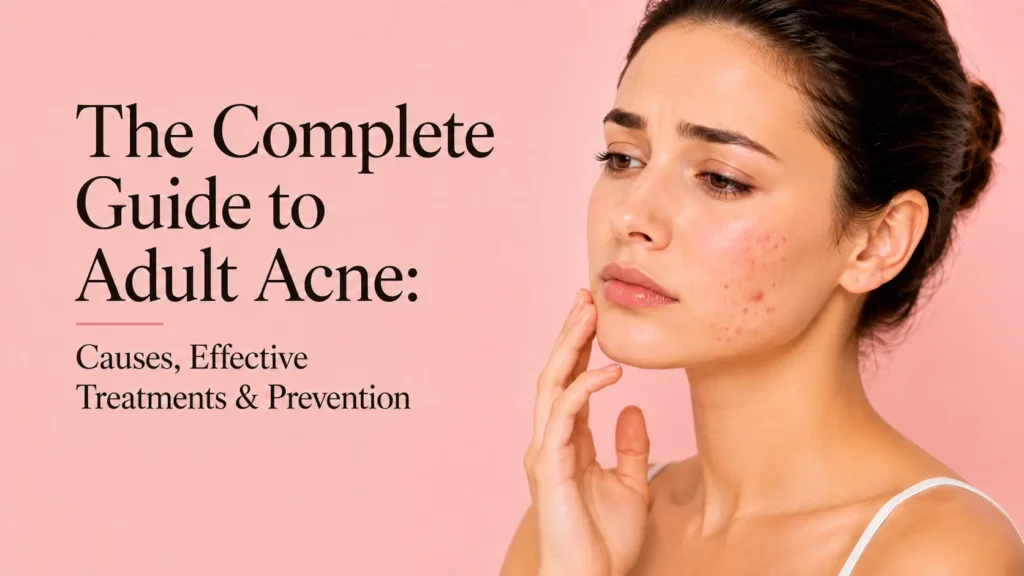
Adult acne is far more common than most people expect, with hormonal fluctuations, stress, and lifestyle factors driving breakouts well past the teenage years. Effective treatment usually requires a combination of topical actives, prescription options, and professional guidance rather than a single product fix. At AK Dermacare in West Delhi, Dr. Parul Garg provides Hormonal acne treatment in West Delhi built around identifying the specific trigger behind each patient’s breakouts before recommending a treatment plan.
Key Takeaways
- What is the best treatment for adult acne? A combination approach works best, typically including topical retinoids, targeted actives like benzoyl peroxide or salicylic acid, and for hormonally driven cases, prescription options such as spironolactone.
- How do dermatologists treat adult acne? By first identifying the acne type and trigger, then layering topical treatments, oral medications when needed, and in-office procedures like chemical peels or light therapy.
- How long does adult acne take to clear? Most treatments require four to six weeks to show visible improvement, with full clearance often taking several months depending on severity.
- Which foods trigger adult acne? Dairy, high-glycemic foods, sugar, and fried or fatty foods are the most commonly linked dietary triggers for adult acne flare-ups.
Why Adult Acne Happens
Acne well into the 20s, 30s, and 40s is actually quite common, and it is not necessarily a continuation of teenage acne. Adult acne is caused by a combination of heredity, hormones, and stress, with hormonal shifts being one of the most significant drivers.
Common triggers include:
- Hormonal fluctuations from menstrual cycles, pregnancy, menopause, or starting and stopping birth control pills
- Chronic stress, which increases cortisol and can worsen breakouts
- Certain medications, including lithium, anti-seizure drugs, and corticosteroids
- Genetics and family history of acne
Because adult acne often has a stronger hormonal component than teenage acne, it frequently appears along the jawline and lower face and tends to be more cystic and stubborn.
What Is the Best Treatment for Adult Acne
There is no single universal treatment, but dermatologists generally build a plan around a few proven categories of care.
- Topical retinoids unclog pores, exfoliate the skin, and have anti-inflammatory effects that speed healing, making them one of the most recommended first-line treatments.
- Benzoyl peroxide works well as a spot treatment for active blemishes and has antibacterial properties, though it should be used sparingly since it can dry out the skin.
- Salicylic acid helps clear clogged pores and is especially useful for blackhead-prone skin.
- Spironolactone, a prescription medication originally used for blood pressure, is often prescribed for hormonally driven adult acne and can produce significant improvement, though it typically takes around three months to show results.
- Oral or topical antibiotics are used for more inflamed, pustular acne under dermatologist supervision.
- Isotretinoin (Accutane) is reserved for the most severe, treatment-resistant cases due to its potency and side-effect profile.
For adult female patients specifically, treatment plans often combine hormonal therapies with topical care, since hormonal acne tends to respond poorly to topical treatment alone.
How Do Dermatologists Treat Adult Acne
A dermatologist treatment for adult acne typically follows a structured approach rather than a trial-and-error routine:
- Diagnosis first: identifying whether the acne is primarily hormonal, inflammatory, comedonal, or triggered by an external factor like medication or diet.
- Gentle skincare foundation: cleansing twice daily with a mild, non-stripping cleanser, since harsh scrubs and astringents dry the skin without actually clearing clogged pores.
- Targeted topical treatment: retinoids, benzoyl peroxide, or salicylic acid depending on the acne type present.
- Prescription support when needed: hormonal medications, oral antibiotics, or isotretinoin for more resistant or severe cases.
- In-office procedures: chemical peels and light-based therapies such as photodynamic therapy can accelerate clearing for patients wanting faster results, though these can be more expensive and light therapy can cause some discomfort.
This staged, diagnosis-first approach is central to how Adult Acne Treatment in West Delhi is delivered at AK Dermacare, where Dr. Parul Garg tailors the combination of topical, oral, and procedural options to each patient’s specific acne pattern rather than defaulting to a generic regimen.
How Long Does Adult Acne Take to Clear
Patience is essential with acne treatment. Most dermatologists agree that visible improvement typically takes four to six weeks, and full results can take several months depending on severity and the treatment combination used. Hormonal treatments like spironolactone can take around three months to show their full effect.
This timeline is one of the most important things dermatologists communicate early on, since many patients stop a treatment too soon, assuming it isn’t working, when in reality it simply hasn’t had enough time to take effect. Consistency with a prescribed routine over this multi-month window is usually what separates successful outcomes from frustrating, incomplete results.
Which Foods Trigger Adult Acne
Diet’s role in acne has shifted from being dismissed to being taken more seriously by dermatologists, supported by newer research. The foods most consistently linked to adult acne flare-ups include:
- Dairy, particularly cow’s milk, which contains growth hormones that can promote clogged oil glands and worsen breakouts
- High-glycemic foods such as sugary cereals, pastries, and white bread, which spike insulin and sebum production
- Sugar-rich desserts and sweetened beverages, linked to a documented increase in acne risk with excess consumption
- Fried and fatty foods, which have a high glycemic load and directly affect skin health
- Individual food sensitivities, since some people react to specific foods like shellfish, dairy, or particular spices with visible skin inflammation
A balanced diet rich in leafy greens, fruits, and vegetables containing vitamin C and beta-carotene can help counter inflammation and support clearer skin alongside topical treatment.
Everyday Habits That Help Manage Adult Acne
Beyond diet and medication, small daily habits make a measurable difference in managing adult acne:
- Wash your face no more than twice a day with a gentle, non-stripping cleanser
- Use lukewarm water and pat skin dry rather than rubbing
- Choose non-comedogenic or non-acnegenic skincare and cosmetic products
- Avoid picking or popping blemishes, and use pimple patches instead to prevent scarring
- Use a fresh pillowcase regularly and sanitise frequently touched items like phones
- Avoid overly aggressive scrubs, which can worsen inflammation rather than help
Cost of Adult Acne Treatment in Delhi
The acne treatment cost in Delhi depends heavily on the treatment combination recommended, since plans range from simple topical prescriptions to a mix of oral medication and in-office procedures. Factors that typically affect pricing include:
- Whether the plan is purely topical/oral or includes procedures like chemical peels or light therapy
- The severity and type of acne being treated, since hormonal or cystic acne often requires a longer, more involved plan
- The number of follow-up consultations needed to adjust the treatment as skin responds
- Whether scarring management is included alongside active acne treatment
At AK Dermacare, exact pricing for Hormonal acne treatment in West Delhi and broader Adult Acne Treatment in West Delhi plans is confirmed after an in-person consultation with Dr. Parul Garg, since the right combination of medication and procedures depends entirely on the individual’s acne pattern and severity.
Why Choose AK Dermacare for Adult Acne
Adult acne, particularly the hormonally driven kind, often does not respond well to over-the-counter products alone and needs a dermatologist’s guidance to identify the right combination of treatments. At AK Dermacare, Dr. Parul Garg evaluates each patient’s acne pattern, hormonal history, and lifestyle factors before building a plan, ensuring treatment addresses the actual underlying trigger rather than just the visible breakouts.
This diagnosis-first approach is particularly important for dermatologist treatment for adult acne, since acne that persists for more than a couple of months or causes scarring despite topical treatment is a clear signal that a more targeted, physician-guided plan is needed.
Final Thoughts
Adult acne is a common, treatable condition once the underlying trigger, whether hormonal, dietary, or stress-related, is correctly identified. A combination of consistent gentle skincare, the right topical or prescription treatment, and patience through the four-to-six-week improvement window produces the most reliable results. At AK Dermacare in West Delhi, Dr. Parul Garg builds every Adult Acne Treatment in West Delhi plan around this exact combination, helping patients achieve lasting clarity rather than temporary fixes.
Frequently Asked Questions (FAQs)
1. What is the best treatment for adult acne?
A combination of topical retinoids, targeted actives like benzoyl peroxide or salicylic acid, and, for hormonally driven cases, prescription options such as spironolactone typically produces the best results.
2. How do dermatologists treat adult acne?
By diagnosing the acne type and trigger first, then combining gentle skincare, topical treatment, prescription medication where needed, and in-office procedures like peels or light therapy for faster results.
3. How long does adult acne take to clear?
Most treatments show visible improvement within four to six weeks, with full clearance often taking several months depending on severity and the specific combination of treatments used.
4. Which foods trigger adult acne?
Dairy, high-glycemic foods, sugar, and fried or fatty foods are the most commonly linked dietary triggers, though individual food sensitivities can also play a role.