
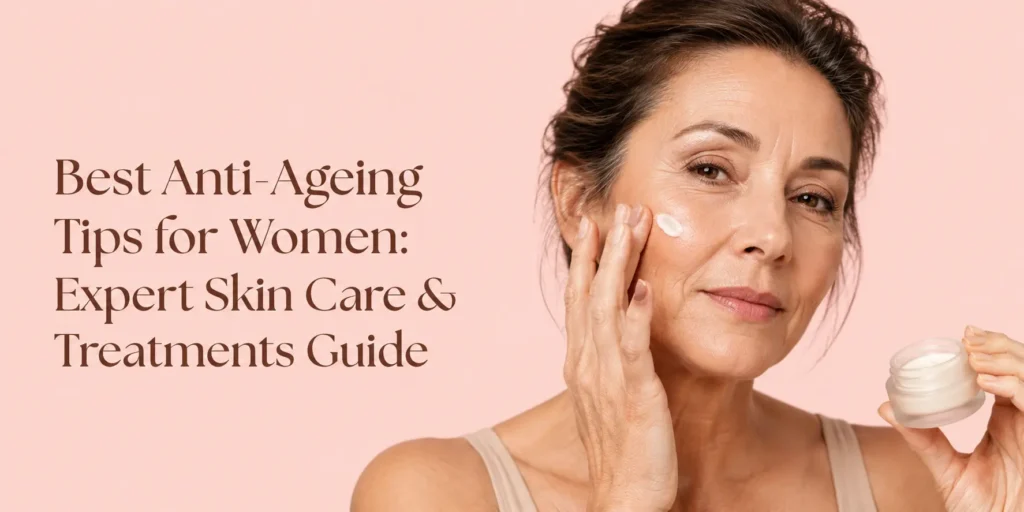
The best anti-ageing tips for women are not found in a hundred-pound cream or a ten-step nightly ritual. They come down to a small number of clinically proven habits: consistent sun protection, a targeted retinoid, a barrier-supportive moisturiser, and the right clinical treatments when topical products reach their limit. At AK Dermacare in West Delhi, Dr. Parul Garg provides personalised anti-ageing treatment in West Delhi that combines evidence-based home care with advanced in-clinic procedures, because ageing skin responds to strategy, not volume.
Key Takeaways
What are the best anti-ageing tips for women? Daily SPF, a retinoid at night, a ceramide moisturiser, and a diet rich in antioxidants. These are the four pillars every specialist agrees on.
How can women reduce wrinkles naturally? By supporting collagen production through retinoids, protecting existing collagen from UV damage with SPF, staying well-hydrated, and avoiding the three main accelerants: smoking, unprotected sun exposure, and chronic sleep deprivation.
At what age should women start anti-ageing skincare? Mid-twenties for prevention, with SPF and an antioxidant serum. Thirties for targeted actives like low-strength retinol. Forties onward for clinical support where topical products alone no longer meet the goal.
Is sunscreen important for preventing ageing? It is the single most important step. Studies consistently show that broad-spectrum SPF prevents more cumulative photoageing than any other topical product, including retinoids.
The anti-ageing industry is vast, confusing, and frequently built on the idea that more is better. More steps, more ingredients, more procedures, more spending. The result is that most women reach their late thirties or forties with routines that are expensive and elaborate, but not necessarily effective, and with genuine confusion about which of the many things they are doing is actually working.
Skin ageing is driven by two processes: intrinsic ageing, which is genetic and inevitable, and extrinsic ageing, which is driven by UV exposure, pollution, lifestyle, and the environment. The second category is where the best anti-ageing tips for women make a measurable difference. You cannot stop intrinsic ageing. You can substantially slow extrinsic ageing, and you can correct much of what has already appeared.
At AK Dermacare, the best anti-ageing specialist in West Delhi, Dr. Parul Garg takes a diagnostic-first approach: identifying what has changed in the skin, why it has changed, and what will actually address it, rather than prescribing a maximalist routine and hoping something works.
Tip 1: SPF Every Day — The Non-Negotiable Foundation
If you implement only one of the anti-ageing tips for women in this guide, this is the one. UV radiation is the primary driver of extrinsic skin ageing. It degrades collagen, triggers melanin overproduction that creates pigmentation, and causes the cumulative cellular damage that accelerates fine lines, laxity, and uneven texture.
The recommendation from every credible dermatologist is SPF 50 PA+++ broad-spectrum, applied every morning as the final skincare step, and reapplied every two to three hours during outdoor exposure. In Delhi, where UV Index readings from April through September regularly reach extreme levels, reapplication is not optional.
What type of SPF to use:
- Mineral SPF (zinc oxide or titanium dioxide): better tolerated by sensitive, pigmentation-prone, and darker skin tones
- Chemical SPF: lighter texture, better suited to oily or acne-prone skin
- Hybrid SPF: combines both filter types, often the most wearable for everyday use under makeup
No serum, no treatment, no clinic procedure produces results that can outrun daily unprotected UV exposure. SPF is the baseline on which everything else builds.
Tip 2: Use a Retinoid — The Only Topical Ingredient with Decades of Evidence
Of all the anti-ageing ingredients available without a prescription, retinol, and with a prescription, tretinoin and adapalene, have the strongest and most consistent body of clinical evidence. Retinoids accelerate cell turnover, stimulate collagen production, fade pigmentation, and improve skin texture in ways that no other single ingredient replicates.
How to use a retinoid correctly:
- Start low: 0.025% to 0.05% retinol, two to three nights a week
- Increase frequency gradually over eight to twelve weeks as tolerance builds
- Apply to dry skin only, after moisturiser if sensitivity is high
- Always follow with SPF the next morning, as retinoids increase photosensitivity
- Prescription-strength tretinoin, available at AK Dermacare, produces significantly faster results than over-the-counter retinol
The most common mistake is giving up during the initial adjustment period, when the skin may experience some dryness or mild peeling. This is not a sign of incompatibility, it is the skin adapting to accelerated turnover. Persisting past this phase is where the results begin.
Tip 3: Build and Protect Your Skin Barrier
A compromised skin barrier is both a consequence and an accelerant of skin ageing. When the barrier is weakened, the skin loses water more rapidly, becomes sensitised, reacts to products it previously tolerated, and shows fine lines more prominently because dehydrated skin exaggerates surface texture.
The anti-ageing tips for women that focus on the skin barrier are frequently undervalued because they are less dramatic than active ingredients. But a barrier that functions correctly makes every other step work better: actives penetrate evenly, hydration is retained, and inflammation, which itself drives ageing, is reduced.
What a barrier-supportive moisturiser needs:
- Ceramides: the primary lipid component of the skin barrier, depleted by age and harsh products
- Cholesterol: works with ceramides to maintain barrier structure
- Fatty acids (such as linoleic acid or squalane): complete the lipid trifecta the barrier requires
For ageing skin specifically, a slightly richer formulation applied both morning and evening outperforms a lighter moisturiser, particularly in Delhi’s dry winter months when transepidermal water loss increases.
Tip 4: Add a Vitamin C Serum in the Morning
Vitamin C (L-ascorbic acid) is one of the few antioxidants with robust clinical evidence for anti-ageing benefit. In the morning routine, it serves two functions: it neutralises free radicals generated by UV exposure and pollution before they degrade collagen, and it inhibits the melanin-production pathway that creates pigmentation and uneven skin tone.
How to use it effectively:
- Apply before SPF as the second step in the morning, after cleansing
- 15 to 20% L-ascorbic acid in a pH-balanced, air-stable formula
- Store in a cool, dark location — vitamin C oxidises and loses efficacy in light and heat
- Medical-grade vitamin C formulations, available at AK Dermacare, are significantly more stable and better absorbed than most over-the-counter options
The combination of vitamin C in the morning and retinoid at night is the most evidence-backed topical anti-ageing pairing available. These two actives working on the correct schedule, without conflicting with each other, produce results that a much larger number of products used simultaneously does not.
Tip 5: Lifestyle Habits That Drive or Slow Ageing
The best anti-ageing tips for women are not limited to what goes on the skin. The factors below have direct, measurable effects on how quickly the skin ages, and no topical routine compensates for them entirely.
Sleep Collagen synthesis and cellular repair are at their highest during deep sleep. Chronic sleep deprivation elevates cortisol, which degrades collagen and drives inflammation. Seven to nine hours is the clinical recommendation, and it is not cosmetic advice, it is physiological fact.
Diet and Hydration A diet high in antioxidants (vitamin C, vitamin E, carotenoids from leafy greens, berries, and orange vegetables) provides the substrate the skin uses to defend against free radical damage. Processed sugars accelerate glycation, a process that stiffens and yellows collagen. Adequate hydration, two litres or more daily, supports the skin barrier and keeps the skin visibly plumper.
Smoking Smoking is one of the most reliably documented accelerants of skin ageing. It constricts blood vessels, reducing oxygen delivery to the skin; degrades collagen and elastin through oxidative stress; and causes the characteristic lip lines and dullness associated with long-term use. No topical product reverses the cumulative effect of smoking on the skin.
Stress Management Chronic psychological stress elevates cortisol chronically, which suppresses collagen production, impairs barrier function, worsens inflammatory skin conditions, and generally accelerates the biological markers of skin ageing. Exercise, which reduces cortisol and improves circulation, is one of the few lifestyle interventions with documented anti-ageing effect on the skin.
At What Age Should Women Start Anti-Ageing Skincare?
| Age Range | Focus | Recommended Steps |
| Mid-Twenties | Prevention | SPF daily, vitamin C serum, lightweight ceramide moisturiser |
| Late Twenties – Thirties | Prevention + Early Correction | Add low-strength retinol 2–3 nights/week; increase SPF diligence |
| Forties | Correction + Maintenance | Prescription retinoid, richer moisturiser, consider clinical treatments |
| Fifties and Beyond | Clinical Support | Advanced treatments alongside home care; collagen-stimulating procedures |
The earlier SPF is adopted as a daily habit, the less correction will be needed later. Prevention, started in the mid-twenties, costs significantly less and produces significantly better long-term outcomes than correction attempted in the forties.
When Home Care Reaches Its Limit: Clinical Anti-Ageing Treatments
The most effective anti-ageing treatment in West Delhi is not a product. It is a clinical procedure that reaches layers of the skin that topical products cannot access. For visible signs of ageing that have already established, the following treatments at AK Dermacare produce results no home routine replicates.
1. HIFU (High-Intensity Focused Ultrasound) HIFU delivers focused ultrasound energy to the SMAS layer, the same layer a surgeon addresses in a surgical facelift. It stimulates collagen production at depth, producing skin tightening and lifting that builds over three to six months. It is the most effective non-surgical treatment for jowling, neck laxity, and brow descent.
2. Profhilo (Skin Booster) Profhilo is a high-concentration injectable hyaluronic acid that spreads through the skin rather than filling specific areas. It stimulates collagen and elastin production, restores skin quality, and provides the kind of deep hydration and radiance improvement that no topical product achieves. Two initial sessions, four weeks apart, with maintenance at six-monthly intervals.
3. Fractional Laser Resurfacing Fractional CO2 or Erbium laser creates controlled micro-columns of injury in the skin, stimulating a collagen-remodelling response that improves surface texture, fine lines, pigmentation, and overall skin quality. Results build over three to six months post-treatment and last significantly longer than most non-invasive alternatives.
4. Chemical Peels Medium-depth peels (TCA or glycolic acid at clinical concentrations) accelerate cell turnover, address surface pigmentation, improve skin clarity, and contribute to collagen remodelling. As a series, they produce cumulative improvement that extends well beyond a single treatment.
5. Botulinum Toxin Botulinum toxin (Botox) temporarily relaxes the muscles responsible for dynamic expression lines, including forehead lines, frown lines between the brows, and crow’s feet. When used preventively, it reduces the reinforcement of expression lines that over time become static. At AK Dermacare, Dr. Parul Garg uses a conservative, natural-result approach that preserves expression.
Anti-Ageing Skincare: Morning vs Evening
| Step | Morning | Evening |
| Cleanser | Gentle, pH-balanced | Thorough (double cleanse if wearing SPF or makeup) |
| Active | Vitamin C serum | Retinoid (retinol or prescription tretinoin) |
| Moisturiser | Ceramide moisturiser (lighter) | Ceramide moisturiser (slightly richer) |
| SPF | Yes — essential, SPF 50 PA+++ | No |
| Eye Area | SPF and moisturiser gently applied | Retinoid (if tolerated) or targeted eye treatment |
The morning routine is protective. The evening routine is reparative. Keeping actives on the correct side of this schedule prevents photodegradation of retinoids and the photosensitivity that some acids generate when worn into UV exposure.
What the Best Anti-Ageing Specialist in West Delhi Recommends
The best anti-ageing specialist in West Delhi does not prescribe a routine based on what is popular on social media or on what is most comprehensive. They prescribe one based on what your skin actually shows, what is driving those changes, and what the evidence says will address them.
At AK Dermacare, Dr. Parul Garg takes a diagnostic-first approach to every anti-ageing consultation. That means identifying whether the primary driver is photoageing, collagen loss, volume depletion, dynamic muscle activity, or some combination, before recommending products or treatments. The result is a plan that is shorter, more specific, and more effective than the maximalist approach most patients arrive with.
Clinical treatments at AK Dermacare are designed to complement home care, not replace it. A well-maintained retinoid and SPF routine significantly extends the results of HIFU or a chemical peel. A clinical treatment significantly accelerates the improvement that home care alone takes years to achieve. The two together produce what neither achieves independently.
Final Thoughts
The best anti-ageing tips for women are not the newest, the most expensive, or the most numerous. They are the ones with the strongest evidence, applied consistently and correctly. SPF every morning without exception. A retinoid at night, built up gradually. A barrier-supportive moisturiser. A vitamin C serum that works with your SPF rather than replacing it. And, where topical products have reached their limit, the right clinical treatment with a specialist who understands what each one actually achieves.
At AK Dermacare, the leading provider of anti-ageing treatment in West Delhi, Dr. Parul Garg builds personalised anti-ageing plans that combine evidence-based home care with advanced clinical procedures. Because the goal is not to look younger at any cost. It is to have skin that is healthy, resilient, and ageing well, on a plan that is specific to you.
Frequently Asked Questions (FAQs)
1. What are the best anti-ageing tips for women in their thirties?
In the thirties, the most impactful steps are introducing a retinoid two to three nights per week, applying SPF 50 PA+++ every morning without exception, and adding a vitamin C serum as a morning antioxidant. These three steps, done consistently, address the main drivers of early visible ageing: reduced cell turnover, UV-driven collagen degradation, and oxidative stress from pollution. A
2. How can women reduce wrinkles naturally?
Naturally reducing wrinkles means supporting what the skin needs to maintain and rebuild itself. Retinoids stimulate collagen production and accelerate cell turnover. SPF prevents the UV damage that degrades existing collagen. Adequate sleep allows the repair processes that occur during the night. A diet high in antioxidants and low in processed sugars reduces glycation.
3. At what age should women start anti-ageing skincare?
SPF should start as early as possible, ideally from childhood, but practically from the mid-twenties when sun protection habits tend to be adopted more deliberately. Vitamin C as a morning antioxidant is appropriate from the mid-twenties. Retinol can be introduced from the late twenties or early thirties, starting at a low concentration and building gradually.
4. Is sunscreen important for preventing ageing?
It is the single most important anti-ageing step available. Multiple long-term studies have shown that consistent, broad-spectrum SPF use measurably slows the development of fine lines, pigmentation, and loss of skin elasticity compared to sun-unprotected skin. No other topical product, including retinoids, produces an equivalent protective effect.
5. What anti-ageing treatments are available at AK Dermacare in West Delhi?
At AK Dermacare, Dr. Parul Garg offers a full range of evidence-based anti-ageing treatments including HIFU for skin tightening and lifting, Profhilo skin boosters for deep hydration and collagen stimulation, fractional laser resurfacing for texture and pigmentation, medical-grade chemical peels, botulinum toxin for dynamic lines, and personalised medical-grade home care routines.