
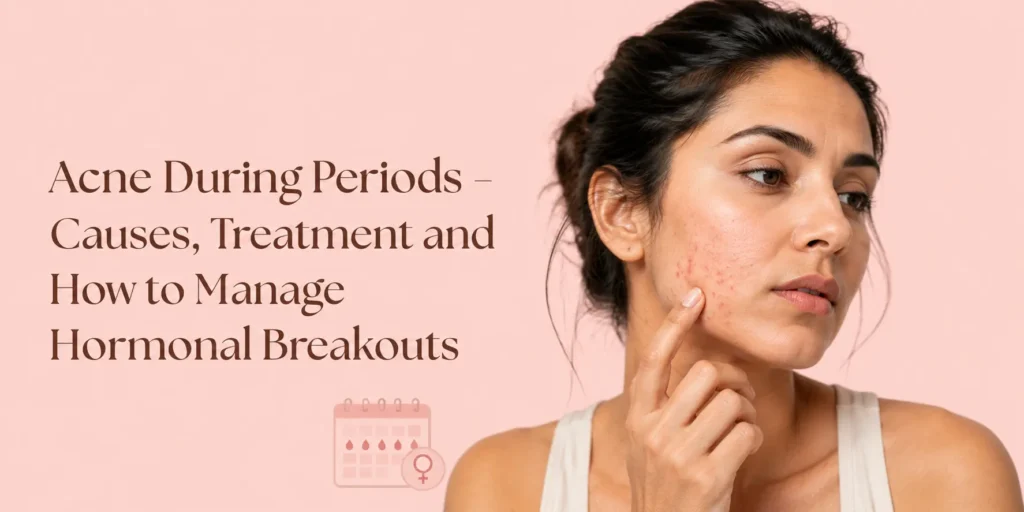
Acne during periods is common and usually hormonal—driven by cyclical changes in estrogen, progesterone and androgens that increase sebum production and follicular inflammation before menstruation. A combined approach of targeted skincare, short-term topical treatments during flare windows, and longer-term dermatologist-led hormonal or medical management gives the best control. For women seeking clinical care, acne treatment for women in Delhi and Period pimples treatment in West Delhi should begin with a clear hormonal and acne-type assessment rather than a one-size-fits-all OTC regimen.
Key Takeaways
- Why do I get acne before my period? Period acne is usually triggered by the luteal-phase hormonal shift—rising progesterone and relatively lower estrogen—plus increased skin oiliness that occurs about 7 to 10 days before menstruation.
- Can hormonal changes cause acne breakouts? Yes. Hormonal fluctuations increase sebum production and follicular plugging, and for many women this consistently causes cyclical breakouts.
- Why does acne appear on the chin and jawline during periods? The chin and jawline are androgen-sensitive zones where sebaceous glands react strongly to hormonal changes, so hormonal acne typically localises there.
- How long does period acne last? Individual lesions usually emerge in the luteal window and clear within 2 to 3 weeks, but without targeted care the cycle repeats and post-inflammatory marks can persist much longer.
Introduction
Hormonal acne during the menstrual cycle is one of the most predictable and frustrating patterns many women face: a cluster of inflamed pimples appears reliably in the week before the period, often on the chin and jawline, and then begins to settle only to recur the next month. This pattern is not random. It reflects the normal hormonal rhythm of the ovulatory cycle interacting with a skin environment that is sensitive to androgens and inflammatory triggers.
Addressing period acne effectively requires a plan that treats the active lesion, reduces the severity of subsequent flares, and minimises post-inflammatory hyperpigmentation and scarring. For women in Delhi seeking specialist care, acne treatment for women in Delhi focuses on this three-part approach: acute control, cycle-based prevention, and long-term maintenance.
Why Period Acne Happens
Acne associated with the menstrual cycle results from predictable endocrine changes:
- In the luteal phase (after ovulation and before bleeding), progesterone rises and estrogen falls relatively. This hormonal milieu increases sebum production in susceptible individuals and can promote follicular occlusion.
- Androgen sensitivity or higher local androgen activity amplifies sebum production and increases the risk of inflammatory lesions. Women with conditions like PCOS often have more severe or persistent cyclical acne because baseline androgen levels are higher.
- Stress, diet, sleep disruption, and certain cosmetics or hair products can make cyclical flares worse by increasing inflammation or occluding pores.
Because these changes are cyclical, acne often appears with predictable timing each month and disproportionately affects the lower face and neck where sebaceous gland response to hormones is strongest.
Why the Chin and Jawline Are Most Affected
Anatomically and hormonally, the chin and jawline are predisposed to hormonal acne because:
- Sebaceous glands in this area are more responsive to androgens.
- Follicular architecture and skin thickness create an environment where plugged follicles more readily become inflamed.
- Mechanical factors like resting the chin on the hand or facial hair removal methods can aggravate local inflammation and worsen lesions.
This explains why inflammatory nodules, cysts, and tender papules often cluster on the lower face in menstrual-cycle related acne.
How Long Does Period Acne Last
Typical timing and resolution pattern:
- Onset: Lesions begin to appear about 7 to 10 days before menstruation as hormonal changes peak.
- Peak: Breakouts are often worst 2 to 3 days before bleeding starts.
- Resolution: Individual pimples usually begin to resolve within 7 to 14 days after their appearance; full resolution of inflammation and any post-inflammatory pigmentation can take 4 to 12 weeks depending on lesion depth and skin type.
- Recurrence: Without cycle-targeted prevention or long-term control, the same pattern will repeat monthly.
The goal of targeted management is to shorten lesion duration, reduce severity at the peak, and prevent dark marks and scarring that persist after each flare.
Practical At-Home Management
Daily routine and short-term flare tactics give most women meaningful control.
Daily baseline routine:
- Cleanse gently twice daily with a non-stripping cleanser to remove excess oil without damaging the barrier.
- Use a lightweight, non-comedogenic moisturizer to maintain barrier health while treating acne.
- Apply a broad-spectrum SPF every morning (important even on cloudy days).
Targeted actives and timing:
- Topical retinoids (night): stabilise follicular keratinisation and reduce comedones long-term; start slowly to avoid irritation.
- Benzoyl peroxide or topical antibiotics (on active lesions): reduce bacterial load and inflammation during flares.
- Salicylic acid or azelaic acid products: help unclog pores and reduce inflammation and pigmentation risk; azelaic acid is gentle and useful in sensitive or pigmented skin.
Short-term flare strategy (7–10 days before expected menses):
- Introduce a short pulse of anti-inflammatory topical care (e.g., benzoyl peroxide spot treatment or topical azelaic acid) for the premenstrual window to blunt peak inflammation.
- Maintain retinoid use outside the immediate irritation window; consult a dermatologist before combining multiple strong actives.
- Avoid picking lesions and aggressive physical exfoliation that worsen inflammation and PIH.
Lifestyle supports:
- Manage stress and prioritise sleep—both lower inflammatory drivers.
- Reduce high glycaemic load foods and consider moderating dairy if breakouts correlate with dietary patterns.
- Check medications and supplements that can worsen acne (some hormonal therapies, high-dose B12).
These measures reduce lesion severity and lower the risk of persistent dark marks.
Dermatologist-Led Treatments
When home care is insufficient or when lesions are deep, recurrent, or scar-prone, specialist treatment is appropriate.
- Oral combined contraceptives: In suitable patients, combined hormonal contraceptives regulate cyclic hormones and reduce acne that flares with the menstrual cycle.
- Anti-androgen therapy (e.g., spironolactone): For women with clear hormonal signs (jawline-predominant acne, irregular cycles, hirsutism), anti-androgen therapy under supervision can significantly reduce flare severity and frequency.
- Short-course oral antibiotics: For moderate inflammatory flares, a time-limited antibiotic can reduce inflammation while other longer-term therapies take effect.
- Isotretinoin: For severe or scarring acne resistant to other treatments, systemic isotretinoin can provide durable remission but requires specialist monitoring.
- Procedural options: Dermatologist-administered intralesional corticosteroid injections quickly reduce painful nodules and cysts; chemical peels, laser toning, and microneedling help reduce post-inflammatory pigmentation and scarring once active disease is controlled.
A targeted plan balances short-term flare control with long-term suppression of the hormonal driver where appropriate.
When to See a Dermatologist
Seek specialist care if:
- Breakouts are severe, painful, nodular, or leaving scars.
- Acne is recurrent each cycle despite consistent OTC care.
- Acne is associated with other signs of hormonal imbalance such as irregular periods, excess facial hair, or sudden weight changes.
- Over-the-counter treatments make the skin inflamed or do not produce meaningful improvement after 2 to 3 months.
A dermatologist will assess for hormonal drivers, perform relevant investigations if indicated (hormone profile, PCOS screening), and recommend a personalised combination of topical, oral, and procedural treatments.
Managing Post-Inflammatory Marks and Scarring
A major downstream problem of period acne is post-inflammatory hyperpigmentation (PIH), which is especially common and long-lasting in darker skin tones.
- Early pigment prevention: using azelaic acid or topical retinoids and strict sun protection reduces PIH risk.
- Targeted pigment correction: chemical peels, low-fluence laser toning, and prescription topicals (e.g., azelaic acid, tranexamic acid formulations) help fade marks over weeks to months.
- Scar management: once active acne is controlled, microneedling RF, fractional resurfacing, and subcision are options for structural scar improvement.
An integrated plan treats active disease first and then addresses marks and texture with timed interventions.
Final Thoughts
Acne during periods is a common, predictable, and medically manageable pattern. The most effective strategy blends consistent baseline skincare, short premenstrual interventions to blunt flares, and dermatologist-led hormonal or procedural options for more severe or persistent cases. For women in Delhi seeking specialist care, Period pimples treatment in West Delhi should begin with a clear assessment of cycle timing, hormonal status, and acne type so the treatment plan matches the root cause rather than only treating surface lesions.
If monthly breakouts are affecting confidence or leaving dark marks, a targeted plan that includes short-term flare tactics and longer-term hormonal management often provides the quickest and most durable improvement.
Frequently Asked Questions (FAQs)
1. Why do I get acne before my period?
Hormonal shifts in the luteal phase, higher progesterone and relatively lower estrogen with increased androgen effect—raise sebum production and follicular occlusion, producing the predictable premenstrual flare.
2. Can hormonal changes cause acne breakouts?
Yes. Hormones directly affect sebaceous gland activity and follicular keratinisation; changes in these hormones during the cycle are common acne triggers in susceptible women.
3. Why does acne appear on the chin and jawline during periods?
The chin and jawline are hormonally sensitive areas with sebaceous glands that respond strongly to androgen signals, so hormonally driven acne commonly appears there.
4. How long does period acne last?
Individual lesions usually resolve in 1 to 3 weeks but post-inflammatory pigmentation can persist for months; the cycle repeats monthly without targeted prevention or medical management.